
AC not dehumidifying in Rochester, NY?
AC not dehumidifying in Rochester, NY? Your home can feel cool but still sticky, even when the system seems to be running normally.
That “muggy” feeling is usually a humidity problem, not just a temperature problem.
During a Rochester summer, your air conditioner has two jobs: cool the air and remove moisture from it.
When moisture removal falls behind, you may keep lowering the thermostat and still feel uncomfortable.
This guide explains how AC dehumidification works, the most common reasons it fails, what you can safely check, and when to call for help.
If you’d rather have a technician test airflow, inspect the drain system, and diagnose the root cause, you can schedule support through our AC and cooling services page.
What indoor humidity “should” be
Most homeowners feel best when indoor humidity stays around 30–50% relative humidity (RH).
Above that, the air can feel sticky, sleep may feel harder, and the home may develop a musty smell even if the temperature looks fine.
If you don’t already track humidity, a basic hygrometer is a simple way to confirm whether humidity is the real issue.
It also helps you verify whether changes you make (fan setting, filters, ventilation) are actually improving comfort.
How your AC removes humidity
Your AC removes humidity when warm, moist indoor air passes over the cold evaporator coil.
Moisture condenses into water on that cold surface, then drains away through the condensate drain system.
For this to work well, three things must be right: airflow, coil condition, and run time.
If any one of those is off, your system can still cool the home while failing to remove enough moisture.
Why your home is cool but still muggy
Below are the most common causes we see when homeowners say, “The AC runs, but the humidity won’t go down.”
Some are simple adjustments; others need a professional diagnosis.
1) Thermostat fan set to “ON” instead of “AUTO”
When the fan is set to ON, it runs continuously—even after the compressor stops cooling.
That can blow moisture back off the coil and re‑introduce humidity into the living space.
What to do: set the fan to AUTO and monitor comfort for the next day.
If you have a hygrometer, track RH morning and evening to see if it trends downward.
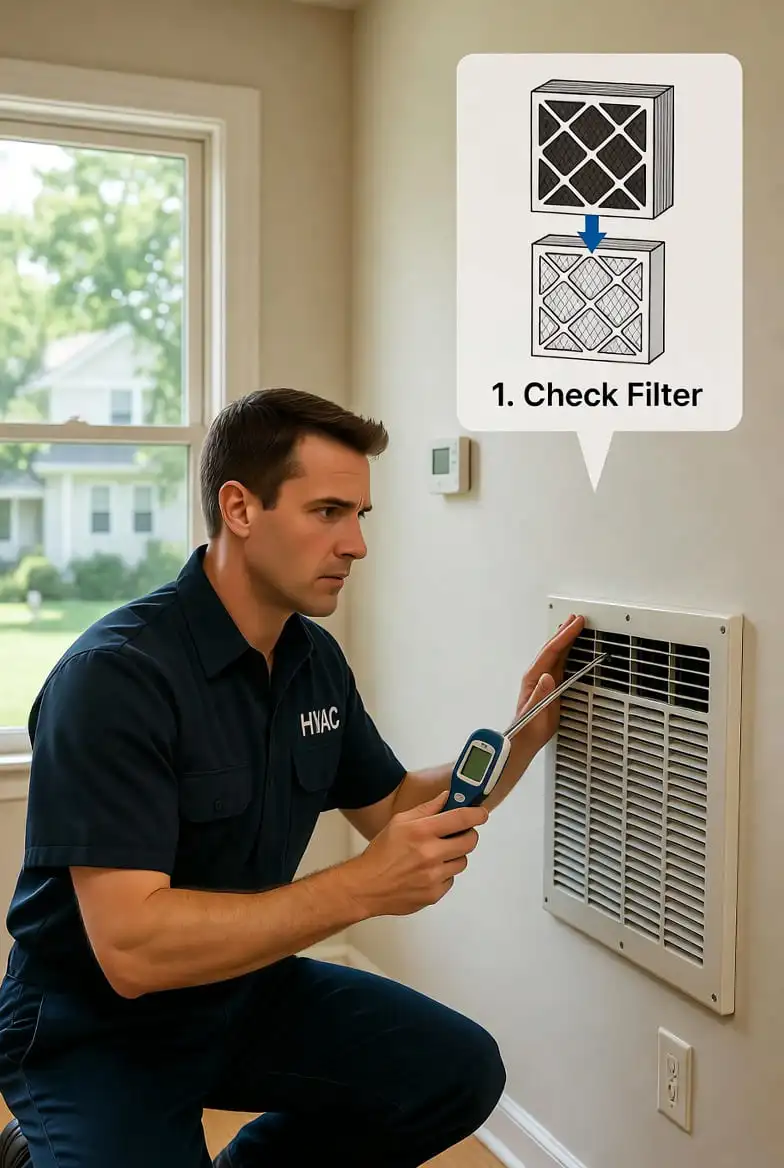
2) Dirty air filter or airflow restriction
Restricted airflow can reduce your system’s ability to dehumidify properly.
It can also increase strain on the system and make comfort uneven from room to room.
What to do: replace the air filter and make sure it’s the right size and installed correctly.
Then check a few supply vents to confirm airflow feels stronger and more consistent.
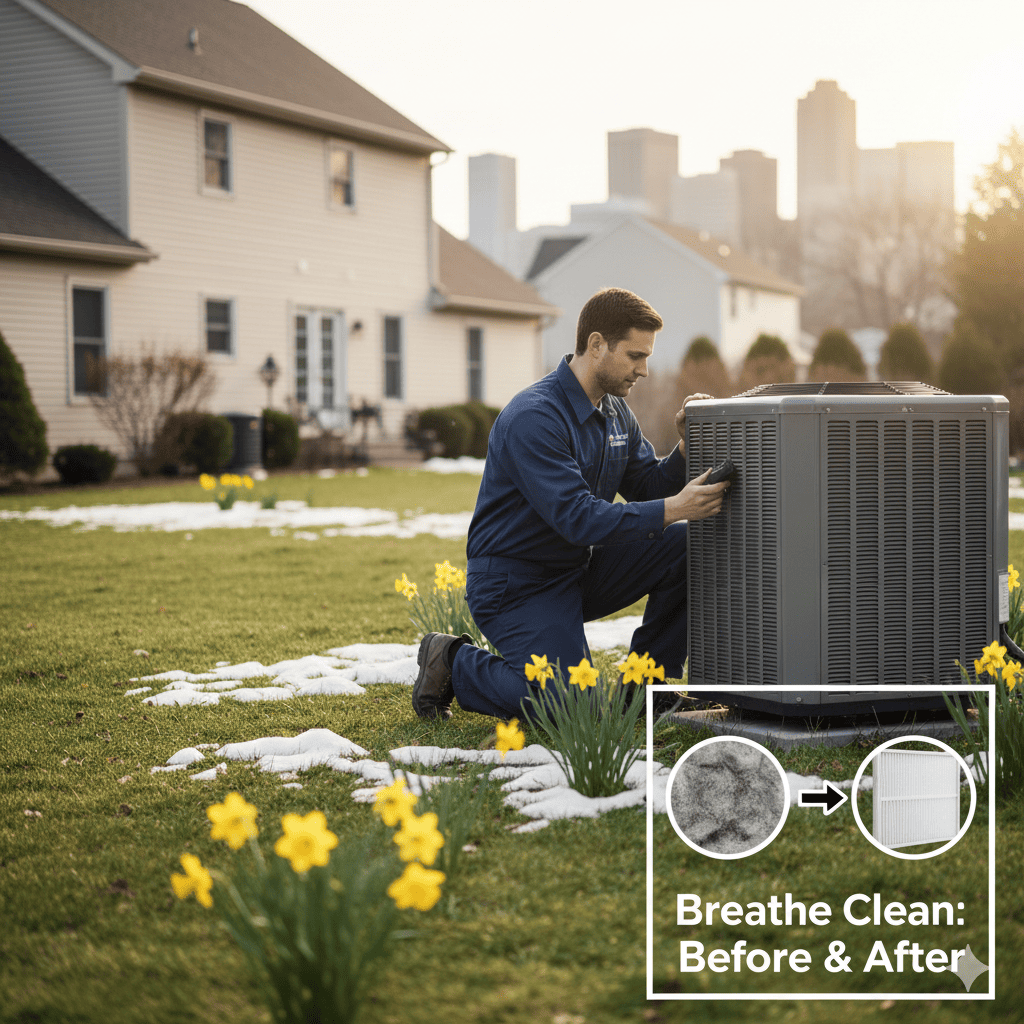
3) Dirty evaporator coil
Even with a clean filter, coils can accumulate dirt over time.
A dirty coil can reduce heat transfer and moisture removal, which can leave you with that “sticky” feeling.
What to do: if you’ve changed filters and fan settings but humidity stays high, coil cleaning is typically a service item.
This is also a good time for a full performance check to make sure airflow and drainage are correct.
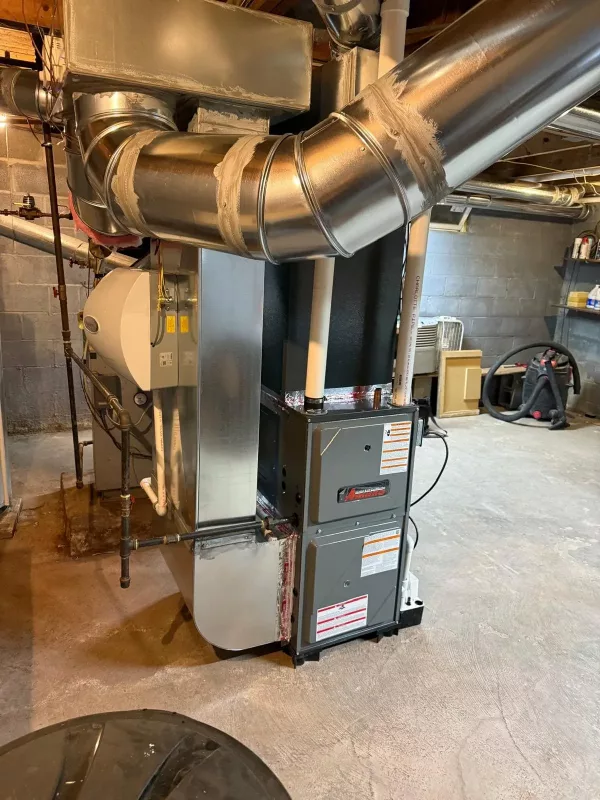
4) Condensate drain line problems (partial clog, slow drain, overflow)
If the condensate can’t drain away the way it should, moisture management gets messy fast.
A drain issue can also show up as musty smells, water around the indoor unit, or intermittent leaking.
What to do: look for water near the indoor unit or signs the drain pan is not staying dry.
If there’s active leaking, turn the system off and schedule service to prevent damage.
5) Short cycling from an oversized system
A system that’s too large for the home may cool the air quickly and shut off.
That sounds efficient, but short run times can reduce how much moisture gets pulled out per cycle.
What to do: if you notice the AC turning on and off frequently and humidity stays high, it’s worth having a tech evaluate sizing, airflow, and control settings.
Fixing humidity sometimes means improving run time consistency rather than “more tonnage.”
6) Your home’s humidity load is too high
Even a perfectly functioning AC can struggle if humidity is constantly being added.
Common contributors include long showers, cooking without ventilation, drying laundry indoors, open windows on humid days, and air leaks pulling in outdoor moisture.
What to do: run bathroom exhaust fans during and after showers, use kitchen ventilation when cooking, and keep windows closed during humid weather.
If you suspect air leaks, sealing and insulation improvements can reduce the moisture your AC has to handle.
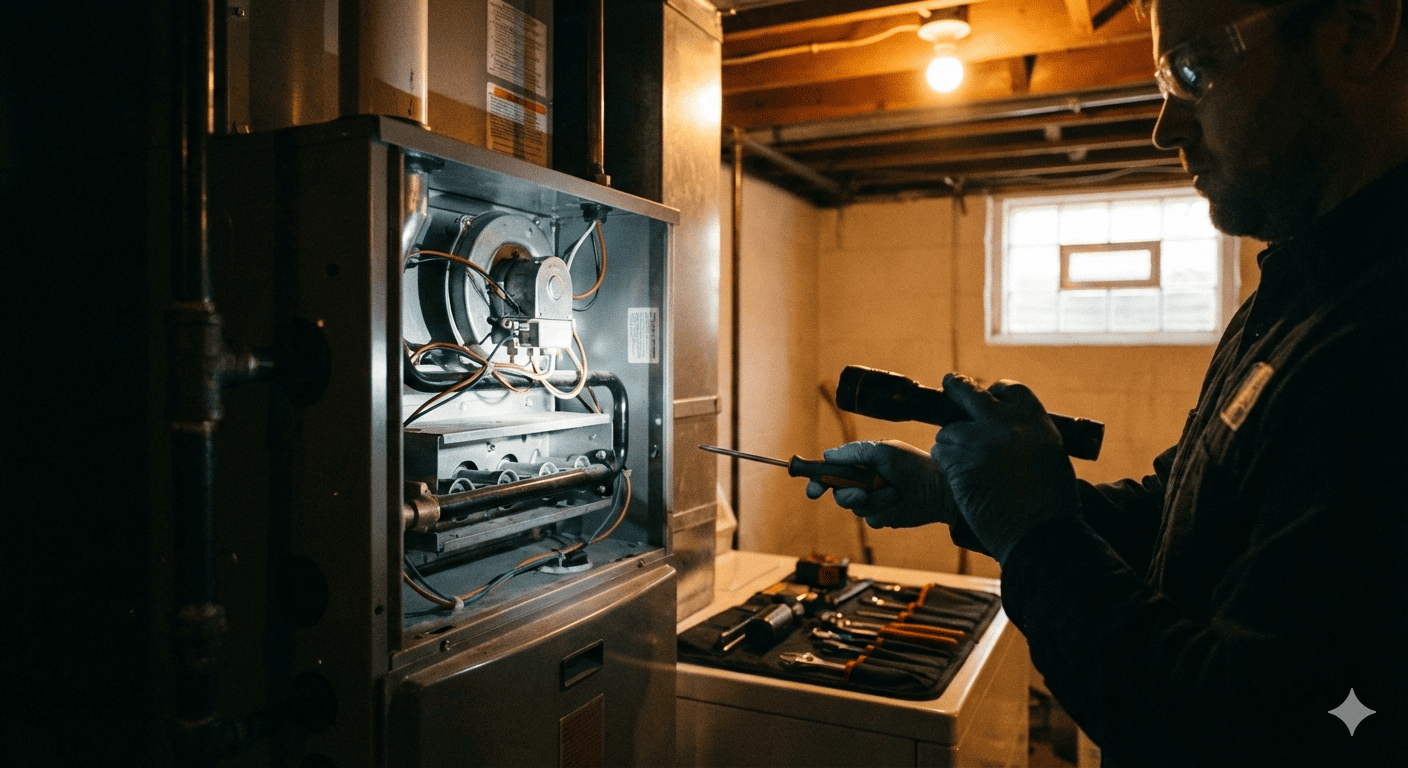
7) Mechanical or control issues that need professional diagnosis
Humidity performance can drop due to blower problems, control settings, or refrigerant-related issues.
These are not reliable DIY fixes because the symptoms can look similar even when causes differ.
What to do: if basic steps don’t help within 24–48 hours, schedule a diagnostic through AC and cooling services so the issue doesn’t escalate.
A proper diagnostic typically focuses on airflow, coil condition, drainage, and overall system operation.
Basement humidity in Rochester summers (a common “hidden” source)
Basements often feel damp in summer because cooler basement surfaces meet warm, humid outdoor air.
That can lead to condensation, musty smells, and the sense that “the whole house is humid.”
A common mistake is opening basement windows on humid days to “air it out.”
Sometimes that brings in more moisture and makes the basement feel worse.
What helps:
-
Track basement RH with a hygrometer so you’re not guessing.
-
Keep windows closed when outdoor humidity is high.
-
Make sure the AC system is removing moisture properly upstairs, since that affects the whole home.
If you want a broader view of where we work around Greater Rochester (including nearby communities that share the same summer humidity challenges), use our Areas We Serve page.
Safe DIY checks (no tools, no panels)
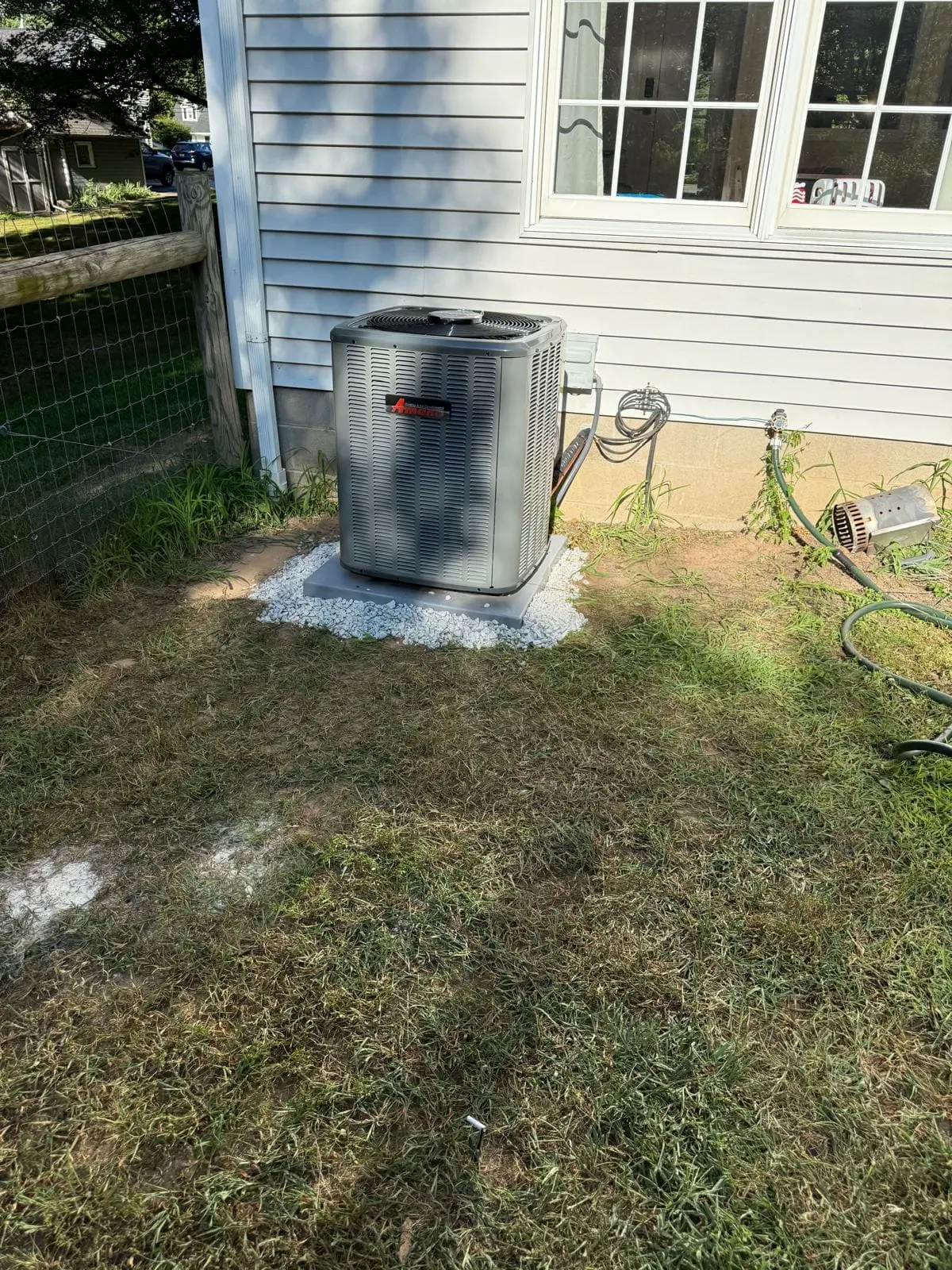
Even with a properly installed outdoor AC unit, humidity issues can still happen when airflow is restricted, the fan setting is wrong, or the system short-cycles. A quick check of thermostat settings and basic maintenance can make a noticeable difference in comfort.
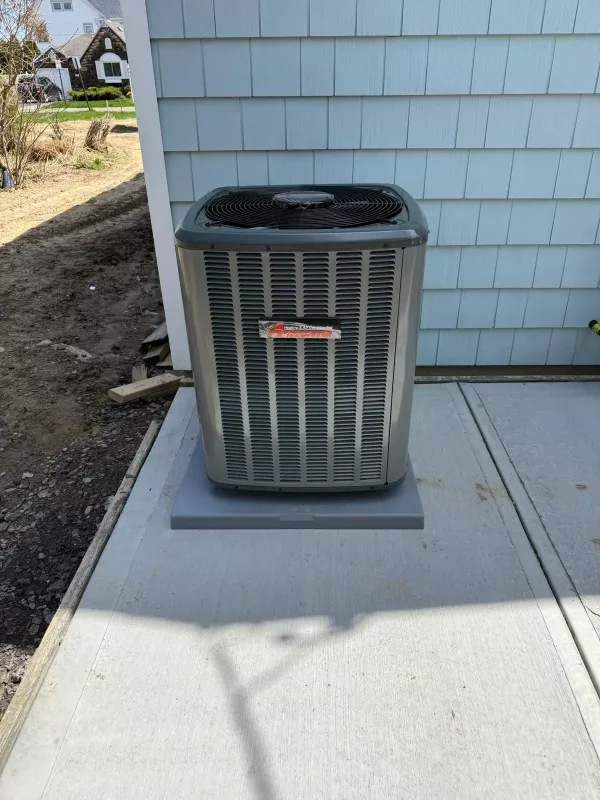
These are quick, low-risk steps that can improve humidity performance fast.
Do them in order and give each change time to show results.
-
Set the thermostat fan to AUTO.
-
Replace the air filter.
-
Confirm supply vents are open and not blocked by furniture, rugs, or curtains.
-
Keep windows closed during humid weather and run exhaust fans during showers/cooking.
-
Look for water around the indoor unit; if you see active leaking, shut the system down and call.
When to call for service (and when it’s an emergency)
Call for service if humidity stays high after you’ve tried fan AUTO + a new filter + basic ventilation improvements.
It’s also smart to call if you notice musty odors that don’t go away, uneven cooling, or repeated short cycling.
Call immediately if you see active leaking, ceiling/wall stains near HVAC equipment, burning smells, or repeated breaker trips.
For urgent problems, MGM offers 24/7 emergency HVAC service.
For non-urgent scheduling, you can also use the contact us page.
If you prefer starting from the service overview, use AC and cooling services.
Quick troubleshooting (symptom → likely cause → next step)
-
Home is cool but feels sticky: Fan set to ON, short cycling, or a high indoor humidity load. Next step: Set the thermostat fan to AUTO, close windows on humid days, and run bath/kitchen exhaust fans; if humidity doesn’t improve in 24–48 hours, schedule a diagnostic.
-
Musty smell near vents or the indoor unit: Moisture plus a dirty coil or a drainage issue can create odors. Next step: Replace the air filter and check for dampness around the indoor unit; if the smell persists, book service.
-
Water around the indoor unit: A drain line or drain pan problem can cause water to pool or overflow. Next step: Turn the system off to prevent damage and call for service (same day is best).
-
Basement feels damp: Humid outdoor air meets cool basement surfaces and can create condensation. Next step: Track humidity with a hygrometer, keep basement windows closed during humid weather, and keep moisture sources under control.
-
AC turns on/off frequently: Oversizing or an airflow/control issue can shorten run times and reduce dehumidification. Next step: Make sure vents aren’t blocked and the filter is clean; if short cycling continues, schedule a professional evaluation.
Long-term fixes that actually reduce humidity
If your home stays humid year after year, the best fix is usually not “turn it colder.”
Long-term comfort comes from correct airflow, a clean coil, proper drainage, and run times that allow moisture removal to keep up.
Regular maintenance helps you catch small issues (like drain restrictions and coil buildup) before they become leaks, moldy odors, or expensive breakdowns.
If you’re curious what real installations and replacements look like, you can also browse our project portfolio.
For more homeowner tips (filters, thermostat settings, seasonal HVAC guidance), you can read the MGM HVAC blog.
That’s also a good place to find related topics if your humidity issue is tied to ventilation or system performance.
Book help if humidity won’t drop
If your AC is running but humidity isn’t improving, it’s usually worth getting the system checked before peak heat pushes it over the edge.
A professional diagnostic can confirm whether the issue is airflow, drainage, cycling behavior, or a mechanical problem.
Schedule through AC and cooling services.
If it’s urgent, use 24/7 emergency HVAC service.