A furnace needs another repair and winter is approaching. The right decision is not determined by age alone or by a rule that multiplies age by a repair price. Start with a diagnosis, then compare what each option actually solves.
At MGM Heating & Cooling, you can request furnace repair or a heating replacement assessment in Rochester. This guide gives you questions to bring to that conversation. It does not predict your repair cost or promise a particular reduction in utility bills.
First establish what is wrong
Ask which fault was confirmed, how it affects operation, and what the proposed repair includes. A symptom such as short cycling, cold supply air, or a cold bedroom can have more than one cause. Replacing the furnace will not automatically correct every duct, control, or building problem.
If equipment is unsafe to operate, the immediate safety instructions come before a price comparison. For a gas smell, leave without operating switches or appliances and call RG&E at 800-743-1702 or 911 from a safe location. For a CO alarm, smoke, or fire, leave and call 911.
When repair deserves a serious comparison
Ask whether the fault is isolated, whether the required part is available, and what the technician can establish about the rest of the equipment. Review previous invoices rather than relying on a vague memory that the furnace is always breaking.
A repair may be worth considering when it addresses a confirmed problem in equipment otherwise suitable for the home. Ask about the repair warranty and any known remaining concerns. No repair can guarantee the future condition of every unrelated component.
When to request a replacement option
ENERGY STAR identifies older equipment, frequent repairs, rising energy use, and comfort problems as reasons to seek a professional evaluation. These are prompts to investigate, not proof that every older furnace must be replaced immediately.
Carrier’s repair-versus-replacement guidance also treats equipment condition and the scope of the problem as decision factors. Ask for both options when the repair is substantial or there is a history of repeat failures. A useful recommendation explains the trade-off for your specific equipment.
Compare complete scopes, not two headline numbers
- Repair: confirmed fault, included parts and labor, warranty, and any unresolved findings.
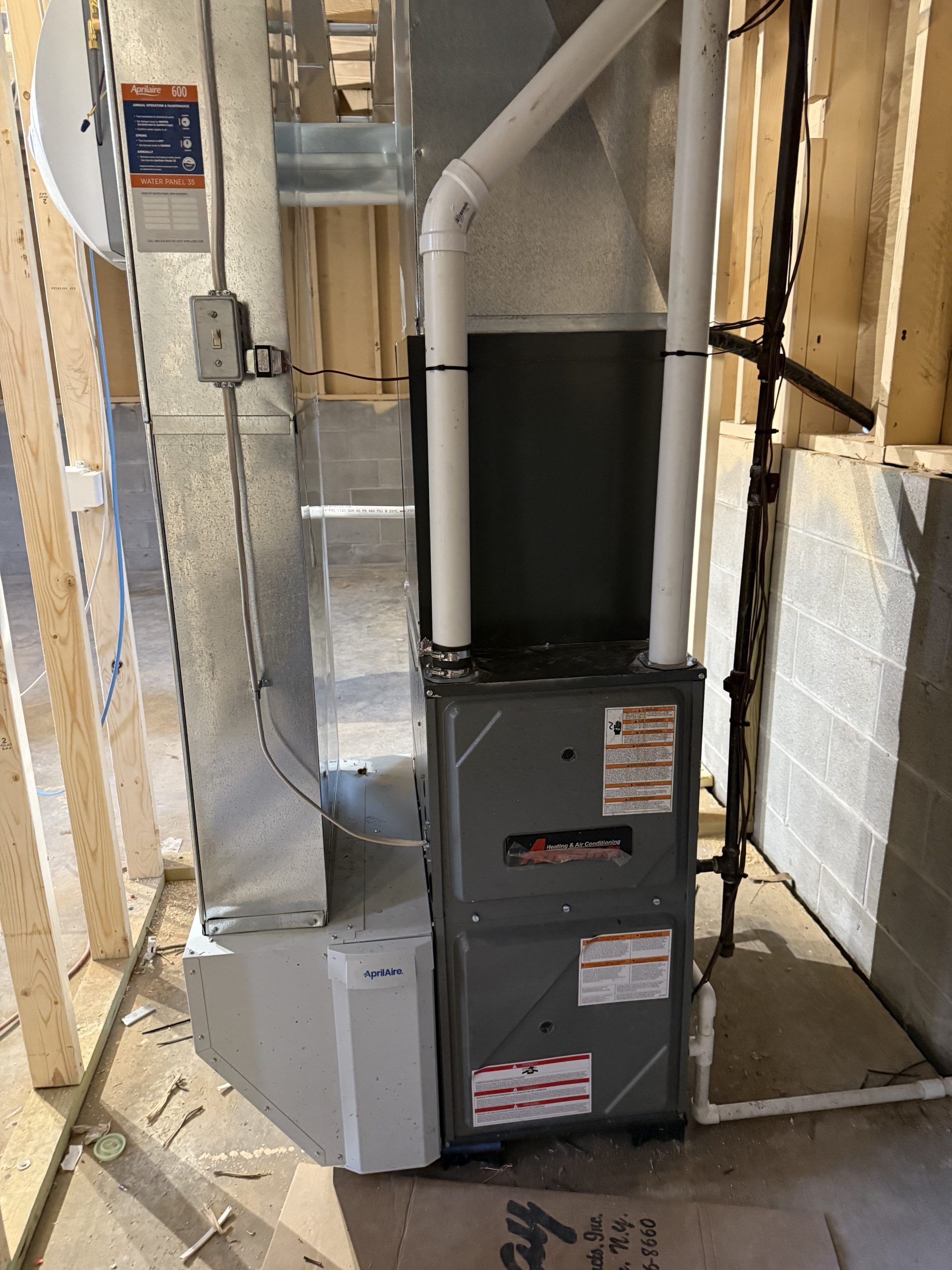
- Replacement: equipment model and capacity, installation work, controls, venting and drainage requirements, and commissioning.
- Home comfort: whether duct or room-level problems require separate work under either option.
- Timing: actual availability and any temporary arrangements discussed with the contractor.
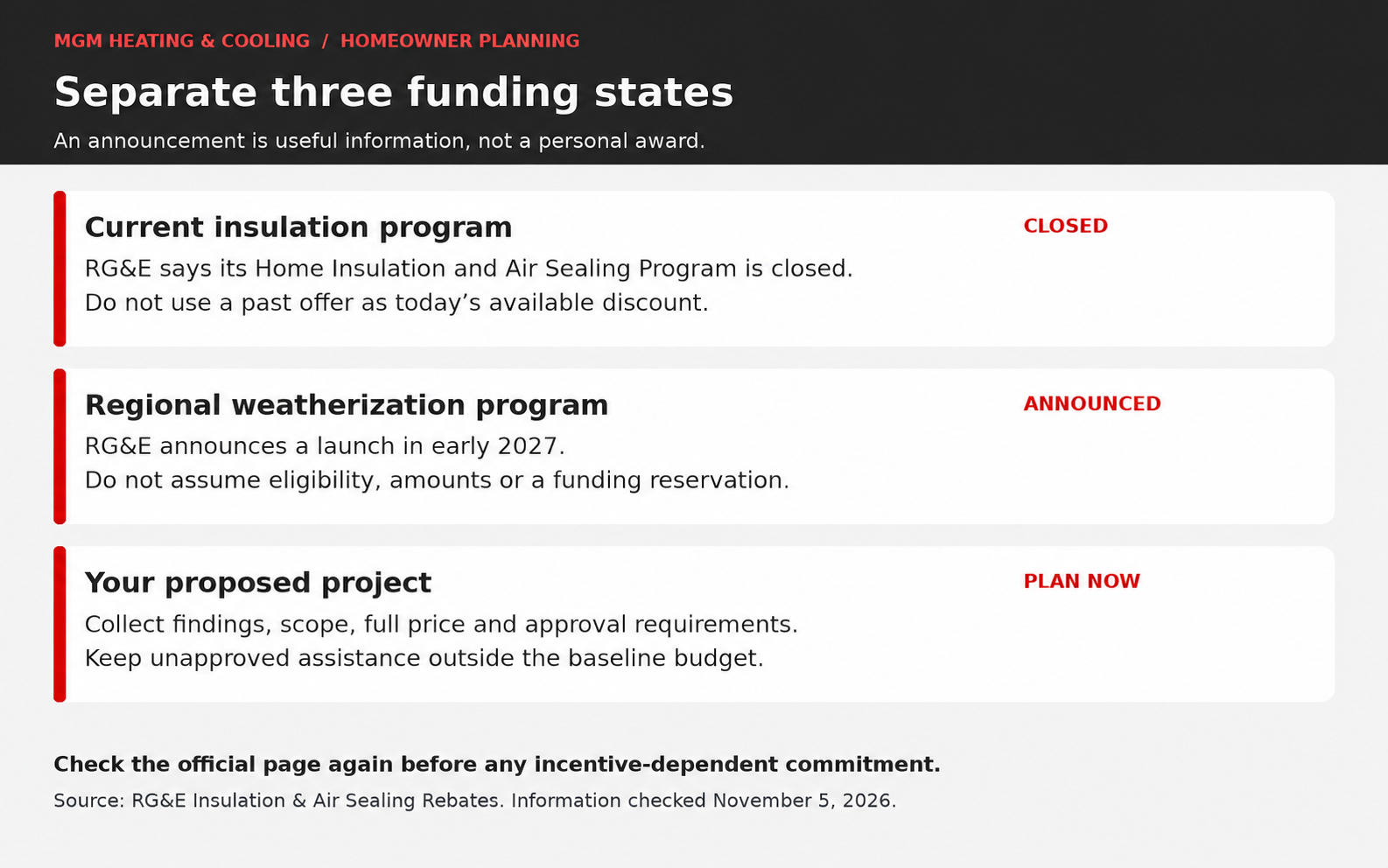
Do not assume an incentive is available or that you qualify without checking current program requirements. Financing terms, if considered, should be reviewed separately from the technical recommendation. This article does not quote a financing offer or rebate.
Plan replacement while you still have options
If the current furnace is operating safely, arranging an assessment before sustained cold weather gives you time to understand the design and scope. For a replacement, ask how the heating load and equipment capacity will be established; the old model’s label is not a complete sizing method.
If the furnace is currently failing, tell the office that you need diagnosis now. Do not keep resetting it or wait for a planned estimate while the home continues getting colder. Our Emergency HVAC page provides the urgent contact route.
Request a clear recommendation
Call (585) 490-5084 or contact MGM Heating & Cooling with the symptom, equipment details if known, and repair history. For additional local repair background, read our Pittsford furnace repair guide.
Repair or replacement questions
Does age alone decide?
No. Age is useful context alongside condition, repair history, suitability, and the confirmed fault.
Will a new furnace fix a cold room?
Only if the cause is addressed. Ask whether air distribution and room heat loss were evaluated.
Can I compare without opening the furnace?
Yes. Gather invoices and thermostat observations. Leave internal inspection to a qualified technician.
Technical references
About the Author: Gedeon Shikhman