
You look outside during heating season and see a cloud rising from the heat pump. The fan may sound different or stop briefly. This can be part of defrost, but an unfamiliar cloud should never be dismissed if there are signs of fire or another hazard.
If you see flames, smell burning, hear a fire or CO alarm, or suspect an electrical emergency, move away and contact emergency services. Do not approach the unit to decide whether a cloud is safe.
What defrost does
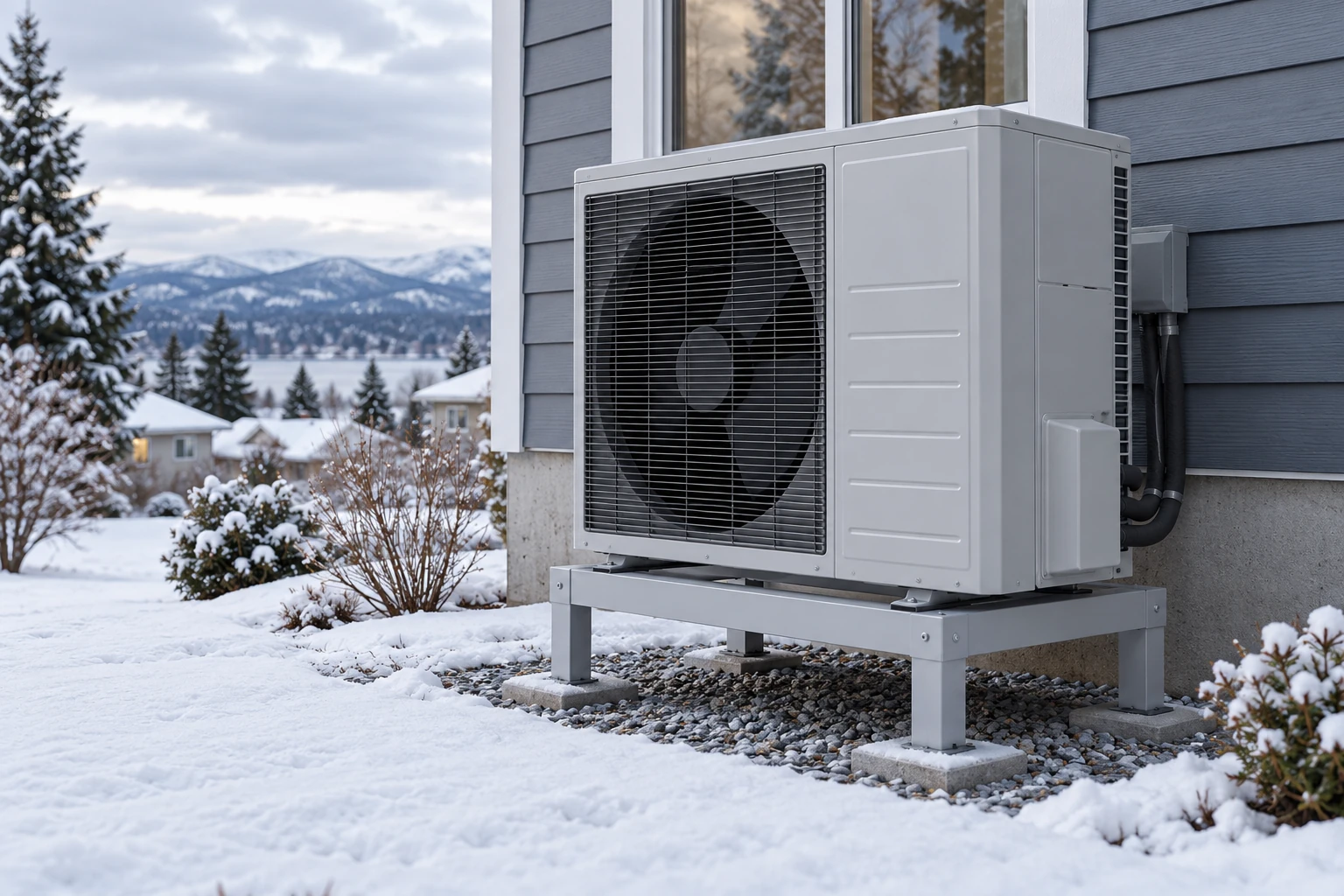
During heating, frost can form on the outdoor coil. Trane explains that a heat pump can temporarily change operation to warm that coil and melt frost. A brief visible vapor cloud can occur as the unit defrosts, after which normal heating resumes.
That explanation is specific to an operating heat pump. An outdoor AC-only unit is not a winter heat source, and a furnace exhaust plume is a different phenomenon. If you do not know your equipment type, ask the service company rather than applying a heat-pump explanation to any outdoor appliance.
Watch the overall sequence from a safe distance
Without touching the equipment, note whether the cloud clears, whether the unit returns to its usual operation, and whether the indoor temperature stays near its setting. There is no single duration that proves every model is behaving correctly.
A short video from a safe position may help show a changing sound or visible frost pattern. Do not reach through the grille, remove a cover, or lean over the unit to get a closer view.
Persistent ice needs attention
Ice that remains and grows, repeated unusual operation, or a home that keeps getting colder warrants a service call. Do not chip ice from the coil, pour hot water on the equipment, apply a heat gun, or cover the unit to warm it. Leave the defrost controls, sensors, electrical parts, and refrigerant system to a technician.
Snow management is a separate subject. Our existing heat-pump snow protection article covers outdoor placement and weather-related considerations. This guide focuses on recognizing a defrost sequence, rather than prescribing snow clearances for every unit.
What to report when calling
- Whether the equipment is a heat pump and its model, if already known
- When the vapor or ice first appeared
- Whether operation returned to normal
- Thermostat setting, room temperature, and any AUX or error indication
- Whether the symptom repeats or the home is losing heat
A technician can compare the observed behavior with the model’s expected sequence and investigate why frost is not clearing if necessary. The goal is to establish whether the system is completing defrost and delivering heat, rather than replacing a part based only on a photograph.
Heat-pump help around Rochester
For heating service, call MGM Heating & Cooling at (585) 490-5084. Mention rapidly falling indoor temperatures when requesting availability. Our emergency HVAC page explains urgent service, and our heat-pump guide provides broader system background.
Defrost questions
Does the outdoor fan always run during defrost?
Operation depends on the model and controls. A brief fan change can fit a defrost sequence, but does not confirm normal operation by itself.
Should I manually force a defrost?
No. Do not enter service modes or alter controls. Record what happens and request qualified help if the unit does not recover.
Can a normal-looking defrost rule out all problems?
No. Persistent loss of indoor temperature, alarms, or other unusual symptoms still need attention.
For a related control question, read why AUX heat may appear in mild weather.
Technical references
About the Author: Gedeon Shikhman