Quick answer: RG&E’s NYS Clean Heat incentives require eligible electric service; a gas-only account does not qualify. Customers receiving both electricity and gas may qualify. RG&E’s residential page specifies one- to four-unit homes; some projects in larger buildings need separate review. Building, equipment and installation conditions also apply. Start with RG&E’s Clean Heat overview.
Program information checked November 5, 2026. This guide focuses on residential space heating. Confirm current project eligibility before purchasing equipment or counting an incentive in your budget.
Start with the electric-delivery section of your bill
Before comparing heat-pump quotes, find a recent bill for the address where the equipment will be installed. A Rochester mailing address or an RG&E logo is not enough to establish which utility provides that home’s electric service.
Look for three things:
- Service address: It should identify the home receiving the equipment, not another property you own.
- Electric service: Check whether the account includes electricity, rather than natural gas alone.
- Delivery company: Separate the company delivering electricity from a company selling the energy supply.
RG&E explains that customers can buy their energy supply from an Energy Services Company, or ESCO, while RG&E continues to deliver it. A different supplier name therefore should prompt a closer look at the delivery charges, not an immediate conclusion that you are ineligible. RG&E’s bill guide explains the distinction.
If the bill is unclear, ask the program to confirm the electric-service account associated with your installation address. Keep the account number private; do not post a bill in a public comment or send it to an unverified rebate website.
Three common account situations
- RG&E gas and electric delivery: You meet the utility-service condition, but still need project approval.
- RG&E electric delivery with oil or propane heat: Not having RG&E gas service does not itself exclude you.
- RG&E gas only: You do not meet RG&E’s account requirement. Ask your electric utility about its programs.
These are screening examples, not rebate approvals. A neighbor’s eligible installation does not establish eligibility for yours.
Check the property and the system being replaced
The current NYS Clean Heat Program Manual, version 3 effective September 1, 2026, requires an active qualifying electric account contributing to the System Benefits Charge. It also sets building, prior-incentive and full-heating-load requirements. A single room’s new mini-split should not automatically be treated as a qualifying whole-home conversion.
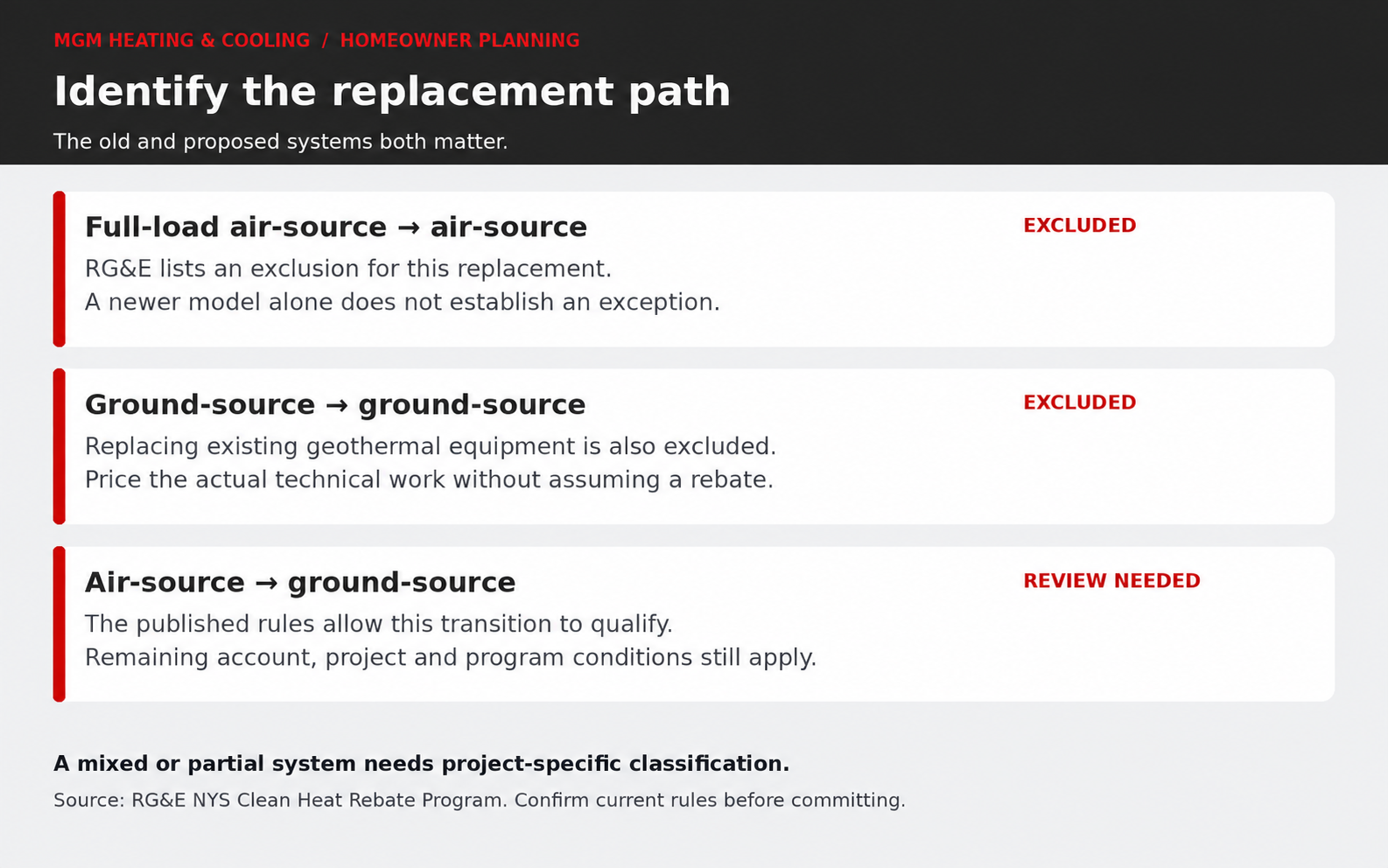
RG&E identifies exclusions for replacing an existing full-load heat-pump system with another full-load heat-pump system, and for ground-source-to-ground-source replacement. An air-source-to-ground-source conversion may qualify, subject to the remaining rules.
The manual also provides for projects serving one to four complete dwelling units in larger buildings where the unit owners do not control the entire building. For a condominium, mixed-use property or larger building, ask the program to confirm eligibility rather than applying the single-family checklist yourself.
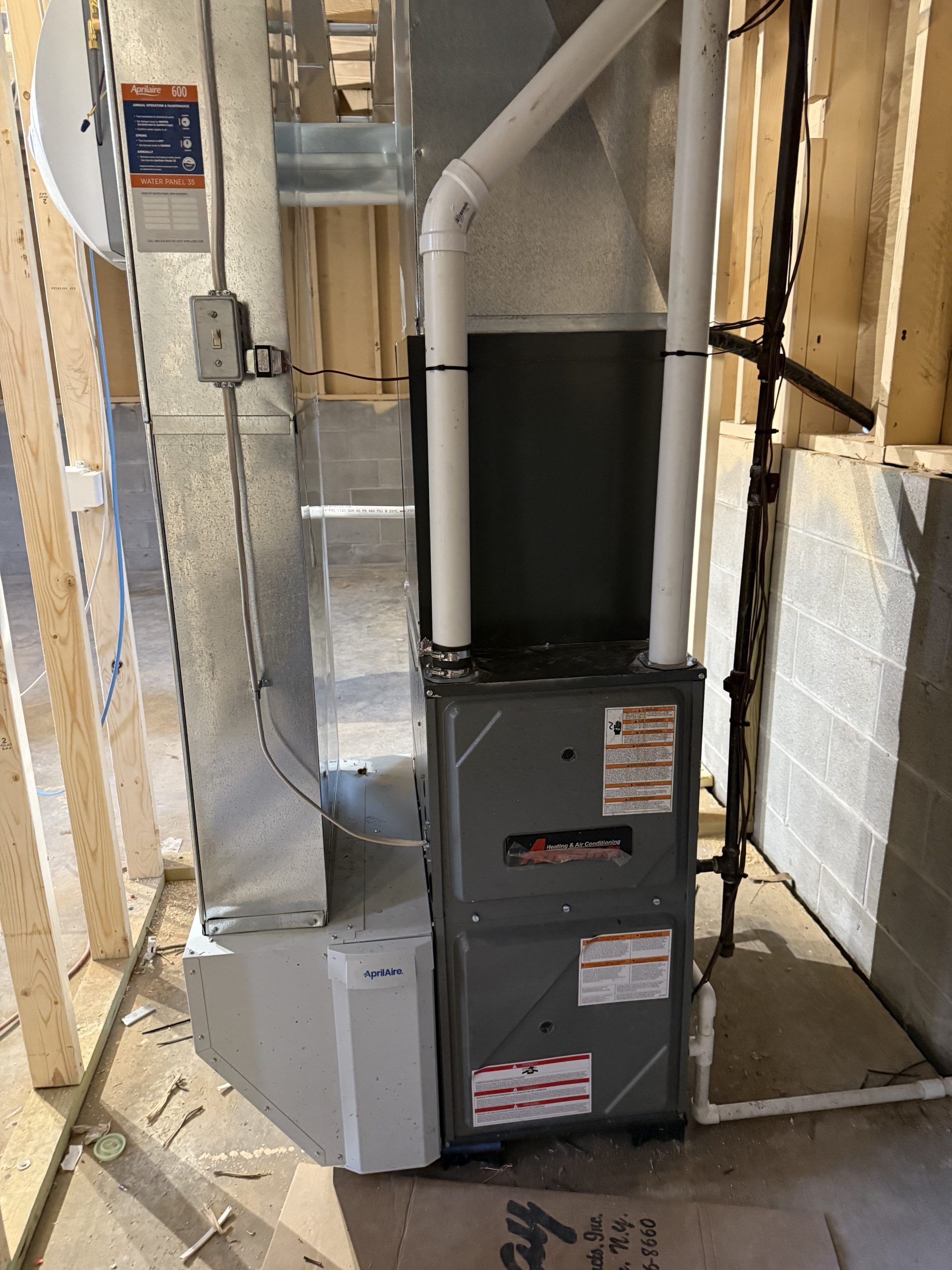
Write down your existing heating equipment and any previous Clean Heat incentive before requesting a quote. If you do not know the model or prior rebate history, mark it as unknown instead of guessing.
Confirm the contractor before discussing the rebate amount
For space-heating incentives, use the official participating-contractor directory and verify participation for the relevant utility and technology. Being an HVAC contractor does not, by itself, establish program enrollment.
RG&E’s contractor guidance says the participant acknowledgment form should be completed before a project begins. Ask who will prepare it, submit the application and respond if the program requests additional information.
Bring these questions to the estimate appointment:
- What exact program and project category are you using for this address?
- Which indoor and outdoor model combination is included in the proposal?
- What documentation supports the incentive estimate?
- Is the estimate shown separately from the full installed price?
- Who receives the incentive, and when does it reduce my payment?
- What would I owe if the application is rejected or the approved amount is lower?
Keep the written answers with the proposal. If two estimates show different incentives, ask each contractor to explain the assumptions before comparing their final prices.
Put the application deadline on the project checklist
For Upstate utility space-heating projects, including RG&E, section 4.2.2 of the September 2026 manual encourages submission within 30 days of installation and requires submission within 60 days. Agree on a submission date and request confirmation that the application was received.
Ask about any steps required before work starts, too. A post-installation filing window is not permission to skip eligibility checks or required paperwork.
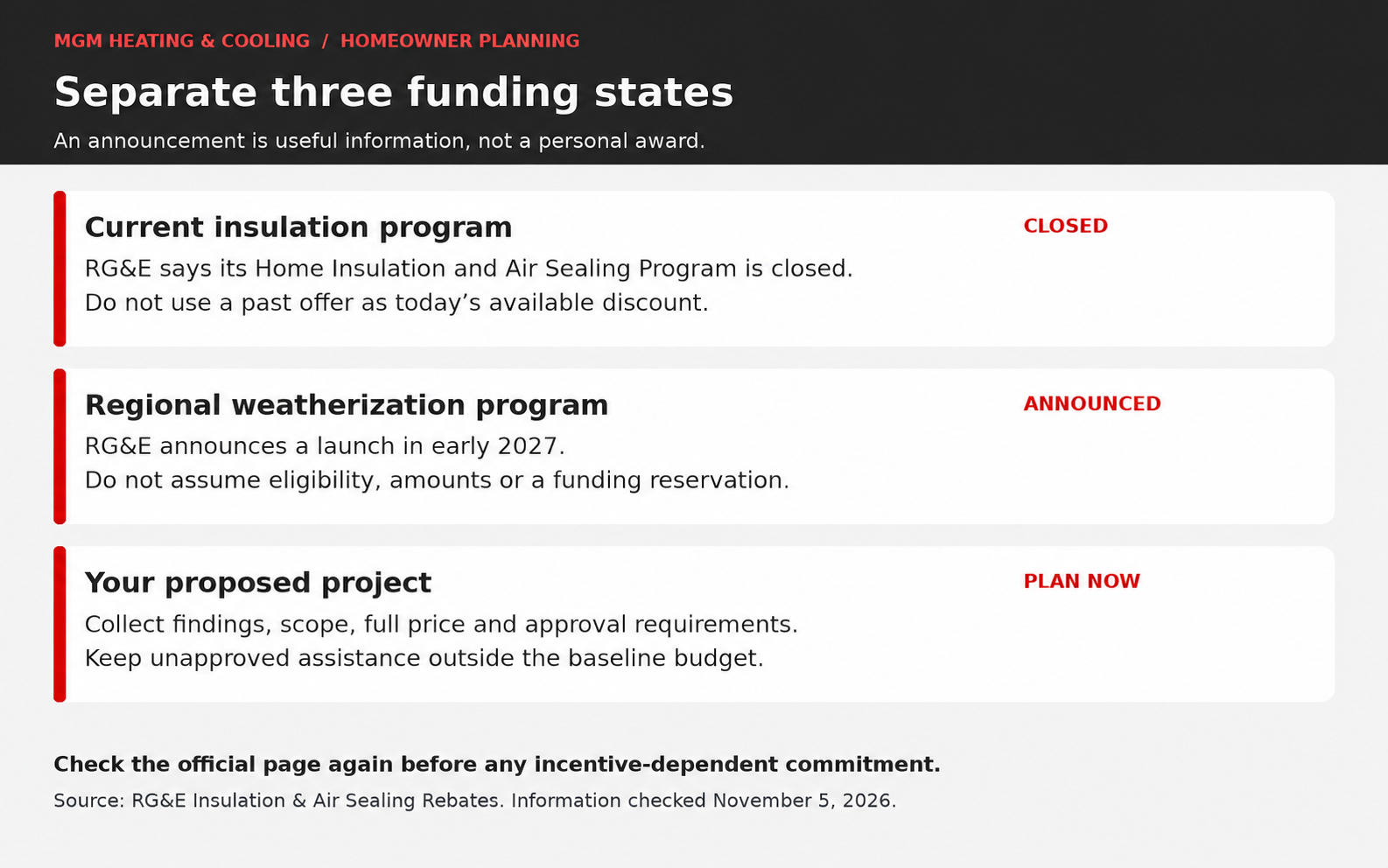
Do not assume that an advertised maximum is your approved amount, or that today’s terms will remain available indefinitely. RG&E says the program closes when its incentive funds are exhausted. For project questions, the NYS Clean Heat contact page lists program support at 844-212-7823.
Avoid two outdated rebate assumptions
The closed Residential Rebate Program is separate from Clean Heat. RG&E’s older Residential Rebates page says that program stopped accepting rebates online or by mail effective June 30, 2025. The same page directs readers to Clean Heat for electric heat-pump incentives. Read the program name carefully before deciding all rebates have ended.
Do not add the federal Energy Efficient Home Improvement Credit to a 2026 installation quote. The IRS guidance limits that credit to qualifying improvements through 2025. Utility incentives have separate rules. Ask a tax professional about your own filing situation rather than relying on an older savings graphic.
Your project checklist
Gather the first four items before the estimate appointment, then keep the written proposal and application plan as the project develops:
- A recent bill showing the correct service address and electric-delivery company.
- The number of dwelling units and an explanation of who owns the unit or building.
- A description of the heating system you have now and any known prior incentive.
- The rooms or dwelling units the proposed system will serve.
- A written proposal that separates equipment, installation and any estimated incentive.
- A named person responsible for the application and a planned submission date.
Keep a copy of the final invoice, equipment information, signed forms and application confirmation together. These records make it easier to resolve a question without reconstructing the project later.
Questions Rochester homeowners ask
Can I use this guide for a heat-pump water heater?
Not as an installation or application checklist. Water heating has separate equipment and application routes. Start with RG&E’s Clean Heat page and the current water-heater requirements.
Planning a heat-pump project around Rochester?
Our Rochester heat-pump guide covers broader system considerations. To discuss your home’s heating needs, contact MGM Heating & Cooling or call (585) 490-5084.
Before signing a rebate-dependent proposal, verify the installing contractor’s current program participation and the conditions that apply to your project.
About the Author: Gedeon Shikhman