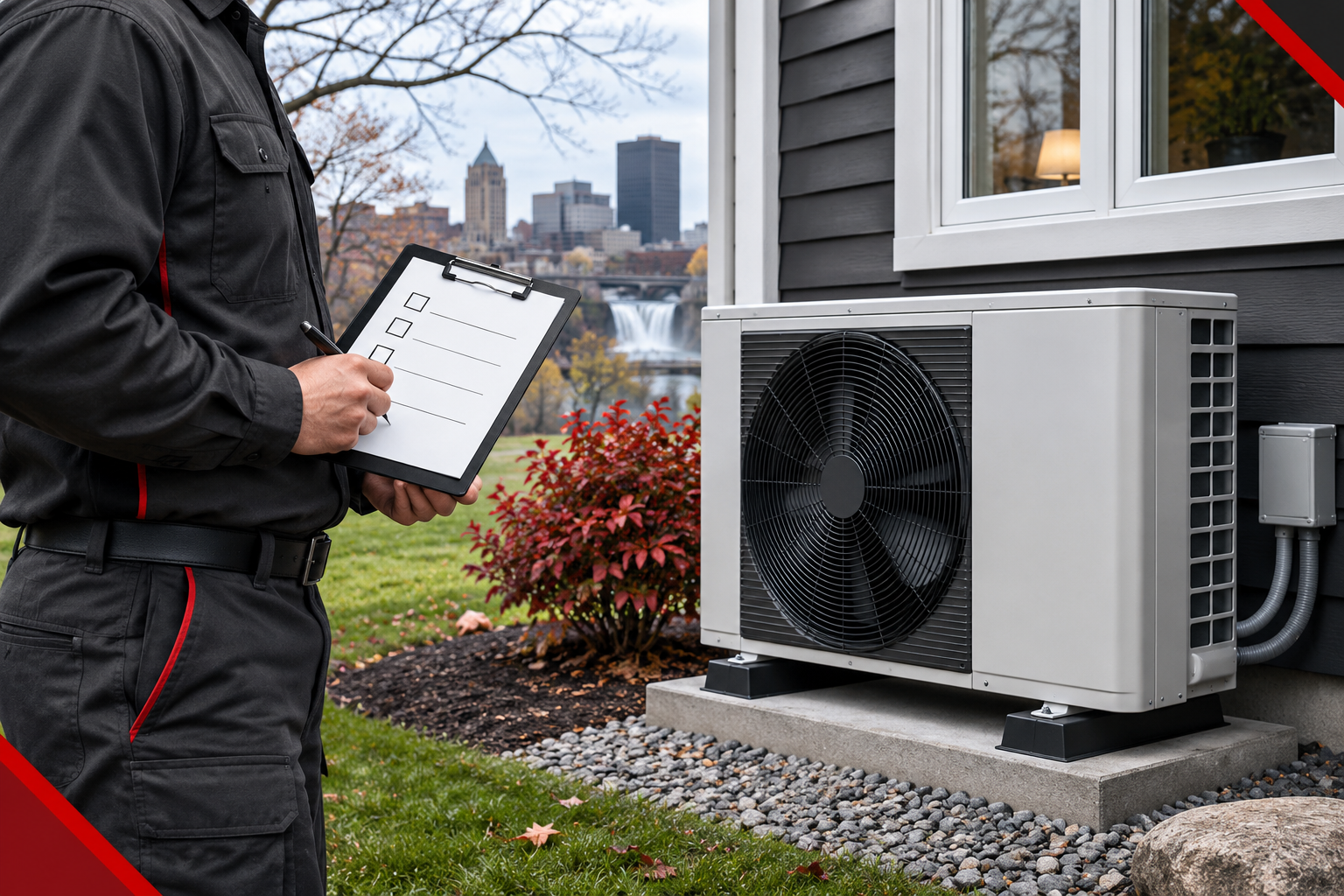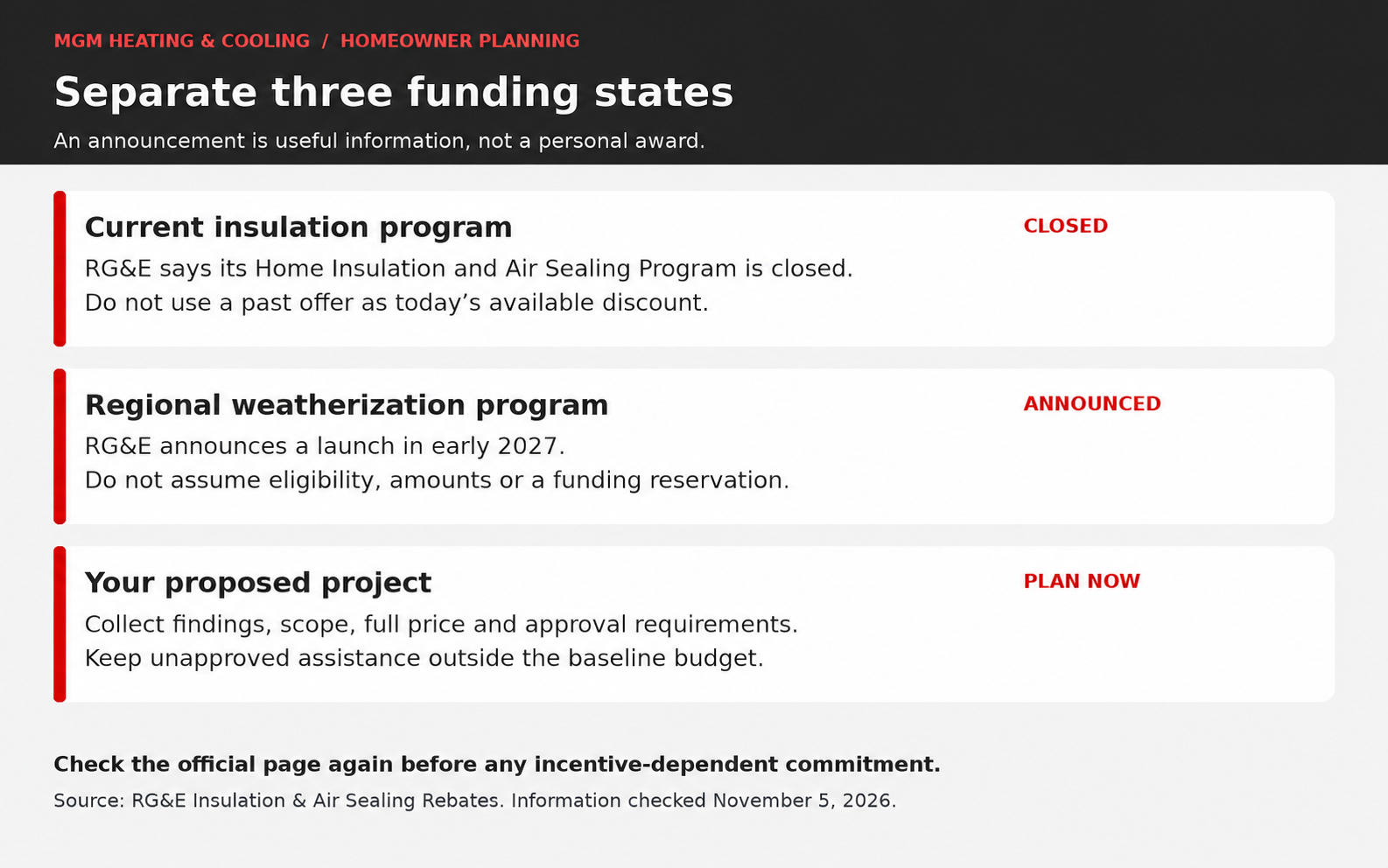

Quick answer: A new heat pump does not automatically qualify for the same incentive as a first conversion to heat-pump heating. RG&E currently excludes full-load heat-pump replacements and ground-source-to-ground-source replacements. Its published rules allow air-source-to-ground-source projects to qualify, subject to the other program conditions. Check the existing system and the proposed transition before including a rebate in your budget. RG&E program overview.
This guide covers space-heating replacements. Heat-pump water heaters have separate program rules.
Begin with what the existing system actually does
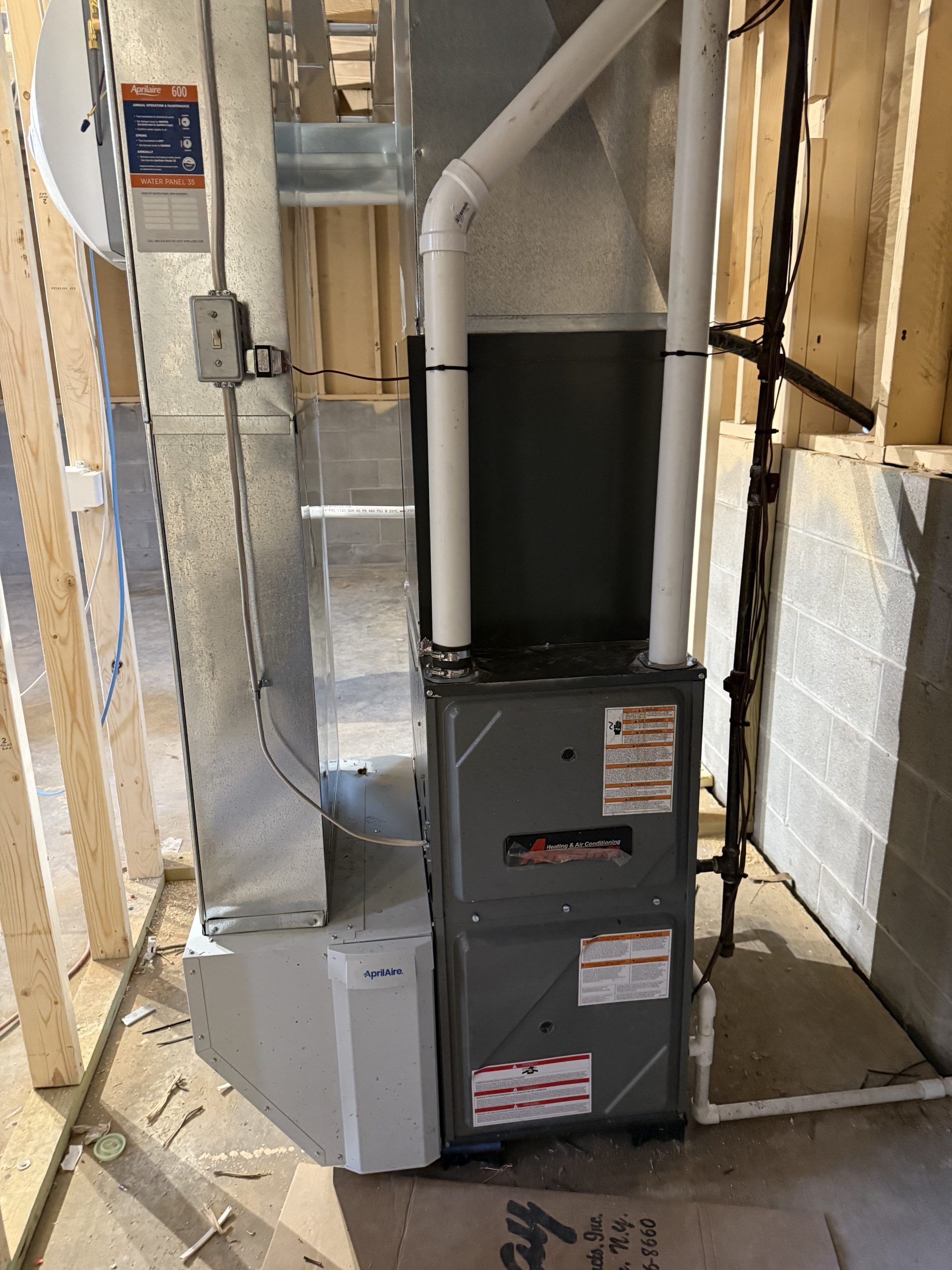
“We already have a heat pump” leaves several important questions unanswered. Is it the home's primary heating system? Does it serve the entire dwelling or only an addition? Is it air-source or ground-source? Is another system responsible for the remaining rooms?
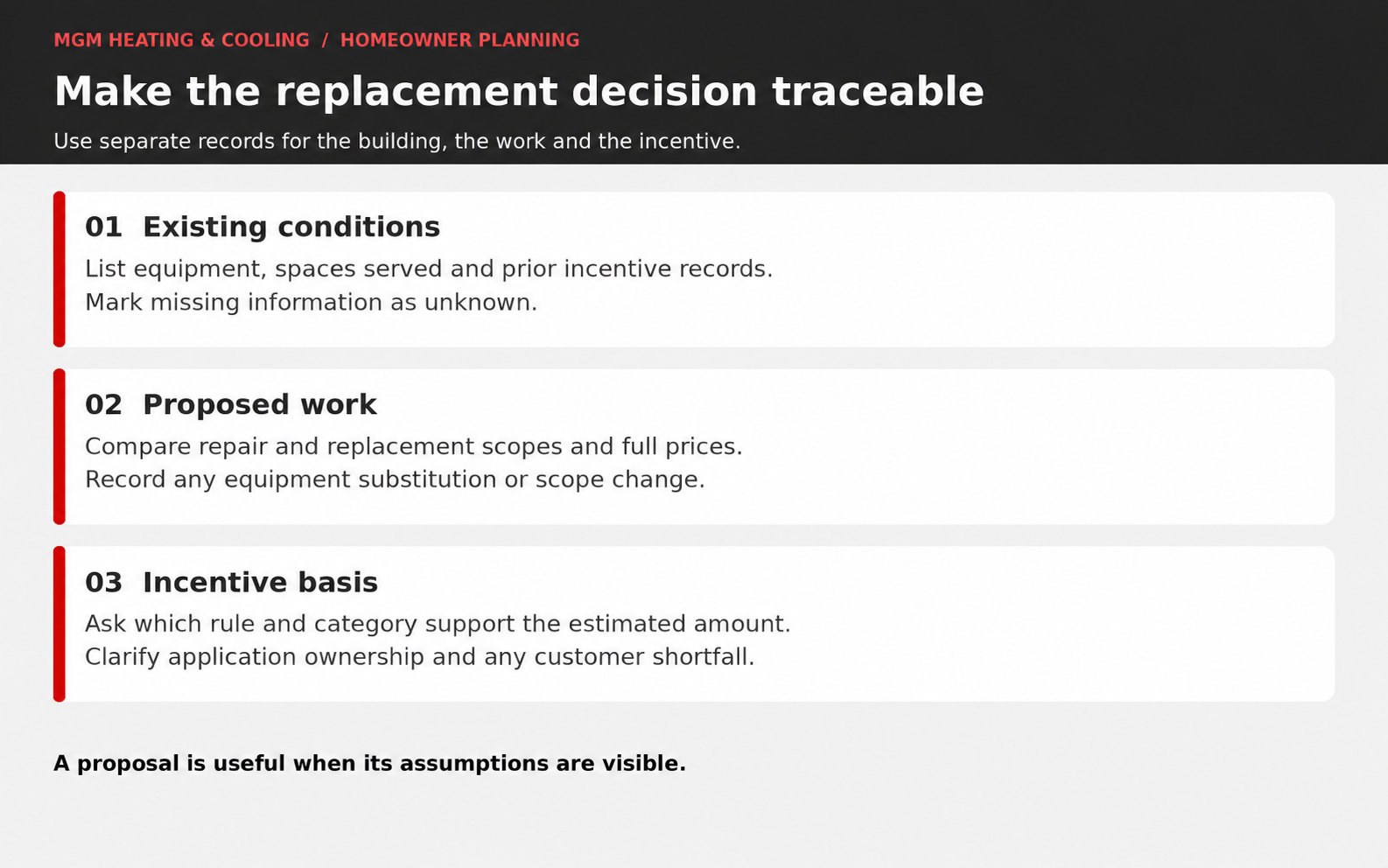
Those details belong in the first conversation about replacement. A model number can identify equipment, but a photo of one outdoor unit cannot explain the whole heating arrangement. Collect the original proposal, equipment schedule, installation invoice and any previous incentive paperwork if you have them. Tell the contractor when records are missing.
Describe the home as it exists today. An addition, finished basement or reconfigured apartment may have changed the space being heated since the original installation. The replacement proposal should explain the current scope rather than simply copy the capacity printed on the old unit.
Separate three replacement situations
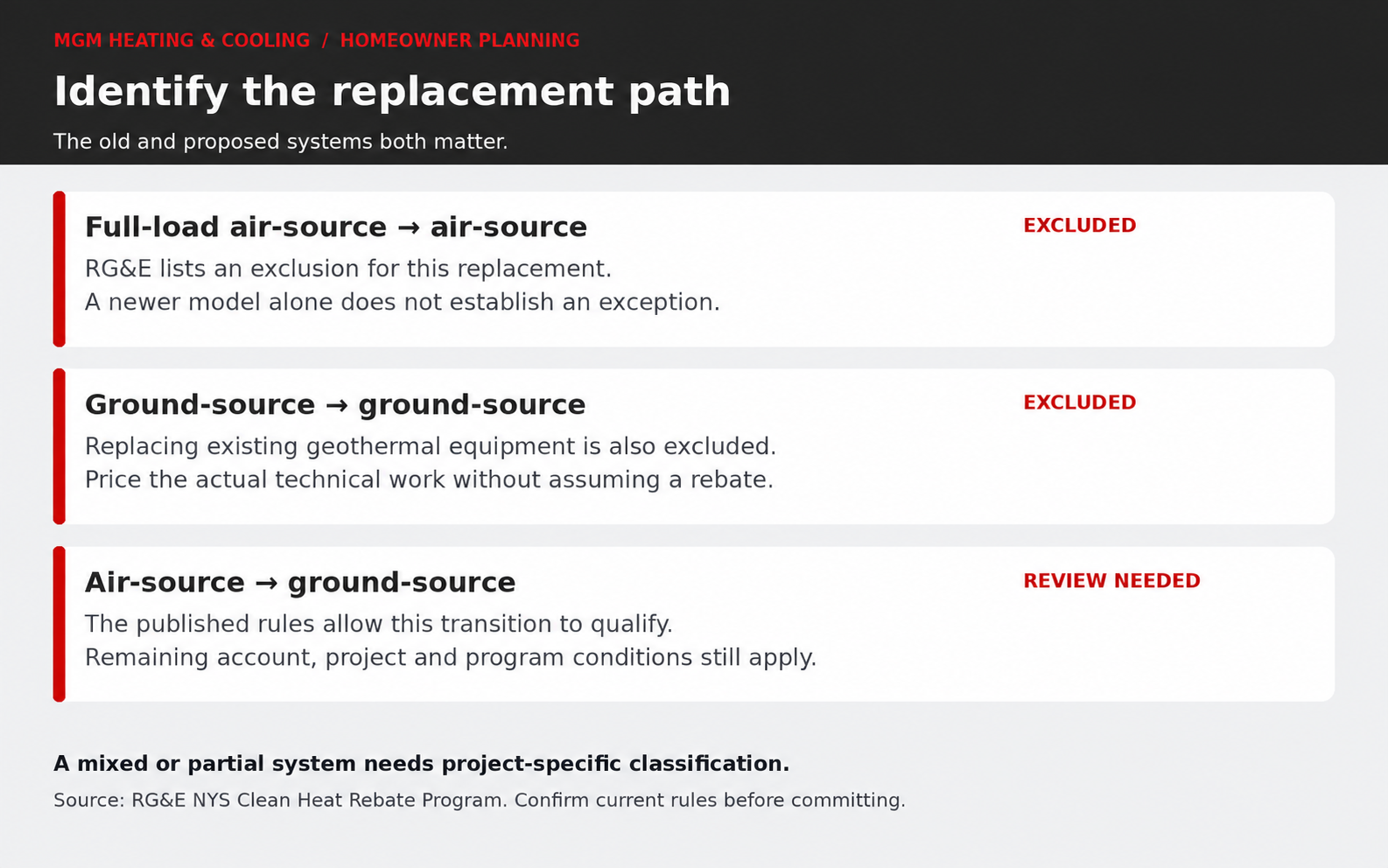
The utility's exclusions create an important distinction between renewing an existing heat-pump system and changing the type of heating installation. Use these examples as questions to investigate, not as a self-approval tool.
An existing whole-home air-source installation is being replaced with another whole-home air-source installation. This is the kind of full-load replacement the published exclusion addresses. A newer model, higher efficiency rating or broken compressor does not establish an exception. If a proposal includes a Clean Heat discount, ask the contractor to identify the applicable rule and obtain clarification before relying on it.
An existing ground-source system needs replacement. Reusing a loop or installing new equipment does not by itself change the underlying transition. Ask what work is technically necessary and price it on that basis. Do not treat a large replacement bill as proof that the project must qualify for an incentive.
An existing air-source system would be replaced by ground-source equipment. The utility identifies this transition as potentially eligible. That is a reason to investigate, not a reason to select geothermal solely for the rebate. The site's feasibility, complete installation cost, equipment design and applicable program requirements still need review.
The distinctions come from the current RG&E overview linked above. Have the participating contractor confirm how the exact project is classified.
A room-by-room arrangement needs a closer look
Some homes have one mini-split serving a sunroom while a furnace or boiler heats the rest of the house. Others have several heat pumps installed at different times. Calling either home “already converted” may hide details that matter.
For a mixed arrangement, ask the contractor to draw a simple map showing which equipment serves each space. Mark equipment that will remain, equipment that will be removed and the proposed new coverage. Include separate dwelling units rather than treating every thermostat as a separate home.
The current NYS Clean Heat Program Manual, version 3, effective September 1, 2026, includes general site eligibility, full-load requirements and prior-incentive restrictions. A partial installation should therefore be reviewed against the actual category rules, not assumed eligible because it is smaller than the proposed replacement.
If the contractor cannot resolve the classification, ask for program guidance tied to the proposed scope. Save the response with the estimate. A general answer about heat pumps is less useful than an answer describing the specific transition under review.
Keep the repair decision separate from the rebate decision
An incentive exclusion does not tell you whether repair or replacement is the better choice. That requires a diagnosis and an explanation of the options for your equipment.
Request a repair estimate that states the identified fault, proposed work and relevant warranty coverage. Request a replacement proposal that identifies the equipment, installation scope, controls, electrical work and any duct or distribution changes. Compare those actual scopes before comparing their prices.
Also ask what is unknown. A contractor may need to investigate a component or inspect an inaccessible area before giving a firm price. A useful estimate identifies that uncertainty rather than concealing it inside a broad allowance.
If the existing system cannot safely heat the home, discuss a safe interim plan with a qualified professional. Do not postpone necessary safety work solely because an unconfirmed incentive might appear later. Leave internal equipment work and control adjustments to the service technician.
Ask for a price you can understand without the incentive
The proposal should let you find the installed price before any program discount. Ask for the estimated incentive on its own line, with the program and project category identified.
Then ask how the contract handles an amount that is denied or reduced. Who is responsible for providing accurate equipment information? Who submits the application? What does the customer owe if the program does not approve the expected amount? Do not assume those responsibilities from the way the sales page describes rebates.
Keep financing costs, utility incentives and potential tax benefits in separate discussions. They have different terms and decision-makers. Check tax-credit eligibility separately from the utility rebate; each has its own requirements.
For broader background on system choices, see MGM's Rochester heat-pump guide. Use the current utility documents, rather than an older general guide, to verify incentive rules.
Put responsibility for the paperwork in writing
RG&E's participating-contractor guidance directs contractors to complete the participant acknowledgment before the project begins. Review the document rather than treating it as a routine signature page.
Before authorizing work, ask for the name of the person managing the application and the method for receiving updates. Keep copies of the proposal, acknowledgment, final invoice and equipment information together. A folder named for the property and project date is sufficient; it does not need to be complicated.
Do not put account numbers, signatures or complete bills in public comments. Share requested records only through a verified contractor or official program channel. If someone requests extra information, ask what it is needed for and where it will be submitted.
Questions to bring to a replacement appointment
- What heating equipment is currently installed, and which rooms or dwellings does it serve?
- Is the proposed work a full-load replacement, a conversion or another category?
- What previous incentive history must be checked?
- Which written rule supports the incentive shown in this proposal?
- What is the full installed price before incentives?
- What changes if the program approves less than the estimate?
- Who owns the application and follow-up steps?
The useful outcome is a clear replacement plan with a defensible price. When an incentive applies, it can be included under its actual conditions. When it does not, you can still make the equipment decision using accurate information rather than a discount that was never available.
About the Author: Gedeon Shikhman