
Quick answer: Possibly, but the MERV number alone cannot establish compatibility. The filter must fit the intended cabinet and have airflow resistance the system can accommodate. EPA recommends MERV 13, or the highest efficiency the fan and filter slot can support, and advises consulting an HVAC professional when needed. Check the equipment instructions and the specific filter before upgrading. EPA’s MERV guidance.
The rating describes particle capture
MERV stands for Minimum Efficiency Reporting Value. It is a standardized way to describe a filter’s ability to capture particles in specified size ranges. A higher rating indicates better capture of the relevant particle sizes under the test method.
It does not tell you everything about how that filter will behave in your system. The label does not establish the condition of the blower, the available airflow, the duct arrangement or whether the cabinet is suitable for the filter.
Start by separating two questions: how well the filter captures particles, and how the installed system moves air through it. Both matter. Selecting a rating without checking the second question can leave you with a product that does not suit the equipment.
A matching width and height are only the beginning
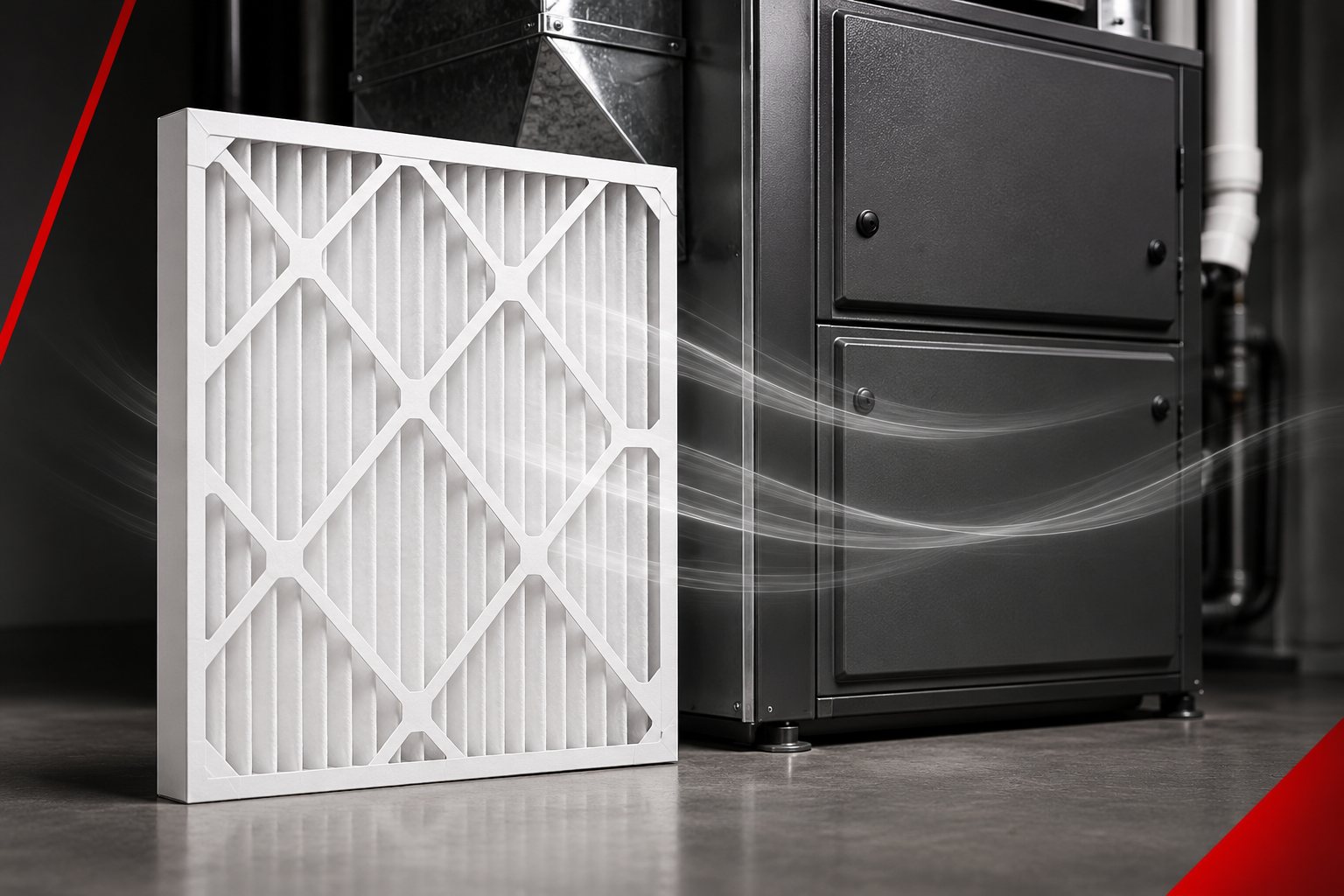
Record the filter’s dimensions and model, along with the cabinet or rack it fits. Check the required depth and the equipment or filter-cabinet instructions. A nominal size printed on a package should not replace checking the actual product and the intended fit.
Ask whether the filter seats properly and whether air can bypass it at the edges or access cover. A product with a strong laboratory rating cannot filter air that takes another path around the media.
PNNL’s filter-installation guidance explains that filter dimensions, depth and surface area affect the design and that the system must accommodate the associated pressure drop. A deeper filter is not a universal drop-in upgrade for a shallow rack. Any cabinet or duct modification needs professional evaluation.
Do not force a filter into place, stack filters or create an improvised second filtering location. Ask the contractor which locations and products are intended for the system.
Ask about pressure drop at the relevant airflow
Pressure drop describes the resistance encountered as air passes through the filter. Filter performance data are meaningful at a stated airflow or face velocity, so a comparison should use conditions relevant to the installation.
Two filters with the same MERV rating can differ in design and airflow resistance. Likewise, a higher rating does not automatically mean every product at that rating is unsuitable. PNNL’s high-MERV guide treats particle removal and resistance to airflow as separate performance considerations.
Ask the technician which manufacturer data support the proposed filter and whether the system’s airflow and pressure conditions need measurement. The answer should consider the whole air path rather than treating the filter as the only source of resistance.
Have the technician compare measured airflow and pressure with your equipment’s requirements. Leave test holes, electrical compartments and blower adjustments to the technician.
Check the existing condition before blaming the new rating
If rooms are already uncomfortable or airflow seems weak, describe those problems before changing the filter specification. A dirty filter may be relevant, but the symptom does not identify the only cause.
Tell the technician when the problem began, whether it affects heating, cooling or both, and which rooms are involved. Note any recent changes to filters, ducts, equipment or renovations. Keep the observations separate from a diagnosis such as “the fan cannot handle MERV 13.”
If a higher-efficiency filter was recently installed, provide its exact model and installation date. A useful evaluation can then examine the product and system together. It should not assume that a MERV number alone proves either compatibility or failure.
MGM’s equipment-repair information is a starting point for discussing an existing system concern. Confirm the scope of the assessment you need rather than assuming a filter recommendation includes every diagnostic test.
Plan for the filter after it collects particles
A clean filter’s data describe its initial condition. As the filter collects material, its resistance can change. Maintenance therefore belongs in the compatibility conversation, not as an afterthought once the product is purchased.
Follow the relevant manufacturer instructions for inspection, cleaning or replacement. Ask the technician how to check the filter safely and whether household conditions may warrant closer attention. Avoid treating one calendar interval as correct for every product and every home.
Keep the approved filter information somewhere easy to find. A photograph of the label and a short note with the replacement date can prevent a later substitution based only on the most prominent number on the box.
If access is difficult or unsafe, ask for help. Routine maintenance should not require crawling into an unfamiliar confined space or walking across an unfinished attic.
Understand what a furnace filter cannot do
A central filter works on air passing through the system. Its rating does not promise removal of every pollutant throughout every room, and it does not provide outdoor ventilation.
EPA’s guide to air cleaners presents filtration as a supplement to reducing pollutant sources and ventilating with clean outdoor air when appropriate. It does not describe an air cleaner as a way to eliminate all indoor pollutants.
Do not use a filter upgrade as a response to a carbon monoxide alarm, a suspected gas leak or another immediate safety concern. Follow the alarm and utility’s emergency instructions and seek emergency help where appropriate. Filtration is not a substitute for addressing a hazardous source.
If your concern is concentrated in one room, discuss the actual exposure and airflow situation. A compatible central filter may be part of the plan, but the highest available rating is not a complete indoor-air-quality strategy by itself.
Ask for a specific recommendation
Before buying a higher-efficiency filter, gather five answers:
- Which filter dimensions, depth and cabinet are specified for this system?
- Which exact filter product is being recommended?
- What data or measurements establish acceptable airflow resistance?
- How should the filter be installed and maintained safely?
- What symptoms or changes should prompt another professional review?
Request that the recommended model or acceptable specification be recorded on the service paperwork. That makes the advice usable the next time you purchase a replacement.
MERV 13 can be an appropriate choice when the product and system are compatible. The sound decision comes from checking that combination, including its maintenance needs, rather than assuming that a stronger filtration label always means a better result in every furnace.
About the Author: Gedeon Shikhman