
A replacement quote often lists a furnace’s BTU rating prominently. Before comparing those numbers, ask how the home’s heating requirement was calculated. Matching the old furnace’s label or using floor area alone does not explain why the proposed capacity fits the home today.
This is a planning guide for a furnace replacement estimate, not a DIY sizing calculator. It does not prescribe a BTU-per-square-foot rule or promise that every home should receive smaller equipment.
Start with the home as it is now
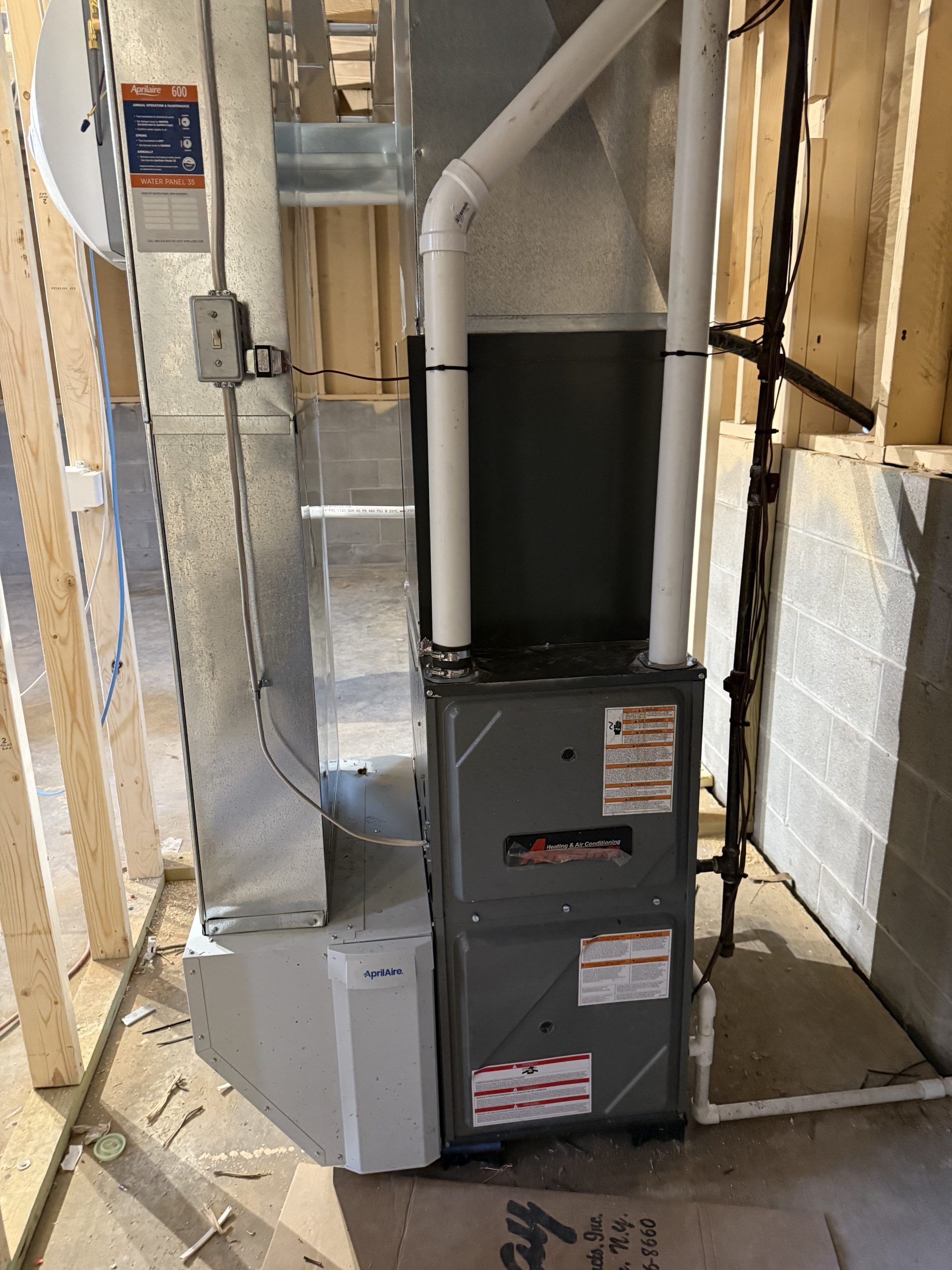
Tell the estimator about additions, finished spaces, insulation changes, replacement windows, and rooms that are consistently uncomfortable. Have the current equipment model available if you already know it, but do not remove panels to find hidden information.
Explain how the existing system performs: Does the whole house struggle, or just one bedroom? Does it repeatedly stop before reaching temperature? Those details help distinguish a capacity question from a distribution or repair problem.
What a load calculation is meant to answer
A heating-load calculation estimates how much heat the building needs under specified conditions. ENERGY STAR’s design guidance references recognized methods such as ACCA Manual J and appropriate local design temperatures. Its new-home program requirements are not presented here as a claim that your replacement project is certified.
Ask which method and outdoor design conditions were used, what building information was entered, and whether the assessment includes room-level needs. A computer-generated number is only as useful as its inputs.
Separate capacity from efficiency
Ask the contractor to identify the proposed furnace’s input capacity, output capacity, and efficiency rating. A higher efficiency percentage is not the same thing as a larger delivered heating capacity.
Also ask how the selected model’s operating stages relate to the calculated load. The aim is to understand the recommendation, rather than comparing one label without the rest of the design.
Do not forget the distribution system
A new furnace still depends on the air pathways connected to it. Ask whether the existing ducts and returns can support the proposed equipment and whether room comfort complaints need separate work. ENERGY STAR advises proper system sizing as part of equipment selection, while DOE’s duct guidance addresses matching airflow to room loads.
If one room is cold and others are comfortable, request an explanation of how the proposed replacement solves that specific symptom. More furnace capacity does not demonstrate that a bedroom receives appropriate airflow.
A useful quote comparison checklist
- Calculation method and the main building assumptions
- Proposed equipment model, input and output capacity
- How duct and return-air suitability will be checked
- Any venting, drainage, control, or electrical work included
- How operation and room comfort will be verified after installation
- Written scope, exclusions, warranty terms, and any separate work required
Have gas, venting, and electrical requirements assessed professionally. Do not use an online sizing result to select wiring, a gas connection, or a venting arrangement.
Request an estimate with the right questions
MGM Heating & Cooling offers furnace and heating services in Rochester. Call (585) 490-5084 or request an estimate. Include the comfort problems you want the project to solve and any building improvements planned.
Furnace sizing questions
Should the new furnace match the old one?
Not automatically. Ask how the current home and the proposed equipment were assessed.
Can square footage determine the size?
It is one input, not a complete explanation of heating demand. Building features and design conditions also matter.
Does a larger furnace guarantee warmer rooms?
No. Room heat loss and air distribution must be considered alongside central equipment capacity.
Still comparing options? Read our furnace repair-or-replacement decision guide before comparing equipment sizes.
Technical references
About the Author: Gedeon Shikhman