
Quick answer: A portable air cleaner can address particle filtration within a particular room, while a central HVAC filter treats the air moving through that system. For a bedroom or office with a closed door, compare the actual air paths, operating time and room requirements before deciding whether to improve central filtration, add a room unit or use both. Neither choice supplies a complete ventilation solution.
Define the room problem first
Start with the place and activity that prompted the question. Is the concern airborne dust in a home office, particles entering from outside or a bedroom used overnight? Record when the concern occurs and whether the door is normally shut. Avoid turning an observation into a diagnosis before the source is understood.
A room that feels stuffy may raise a ventilation question. A visible dust deposit raises different questions about sources, cleaning and airborne particles. An odor may require investigation beyond a particle filter. Naming the concern helps prevent an expensive purchase made to solve the wrong problem.
If there is a carbon monoxide alarm, suspected gas leak or another immediate hazard, leave the affected area and follow emergency guidance. Shopping for an air cleaner is not the next step in an emergency.
Draw two different air paths
On a simple room sketch, mark the supply outlets, any return grille, the door and the proposed portable unit. Ask an HVAC professional how room air reaches the central filter when the door is closed. Do not assume that a grille visible somewhere in the hallway proves adequate circulation from every bedroom.
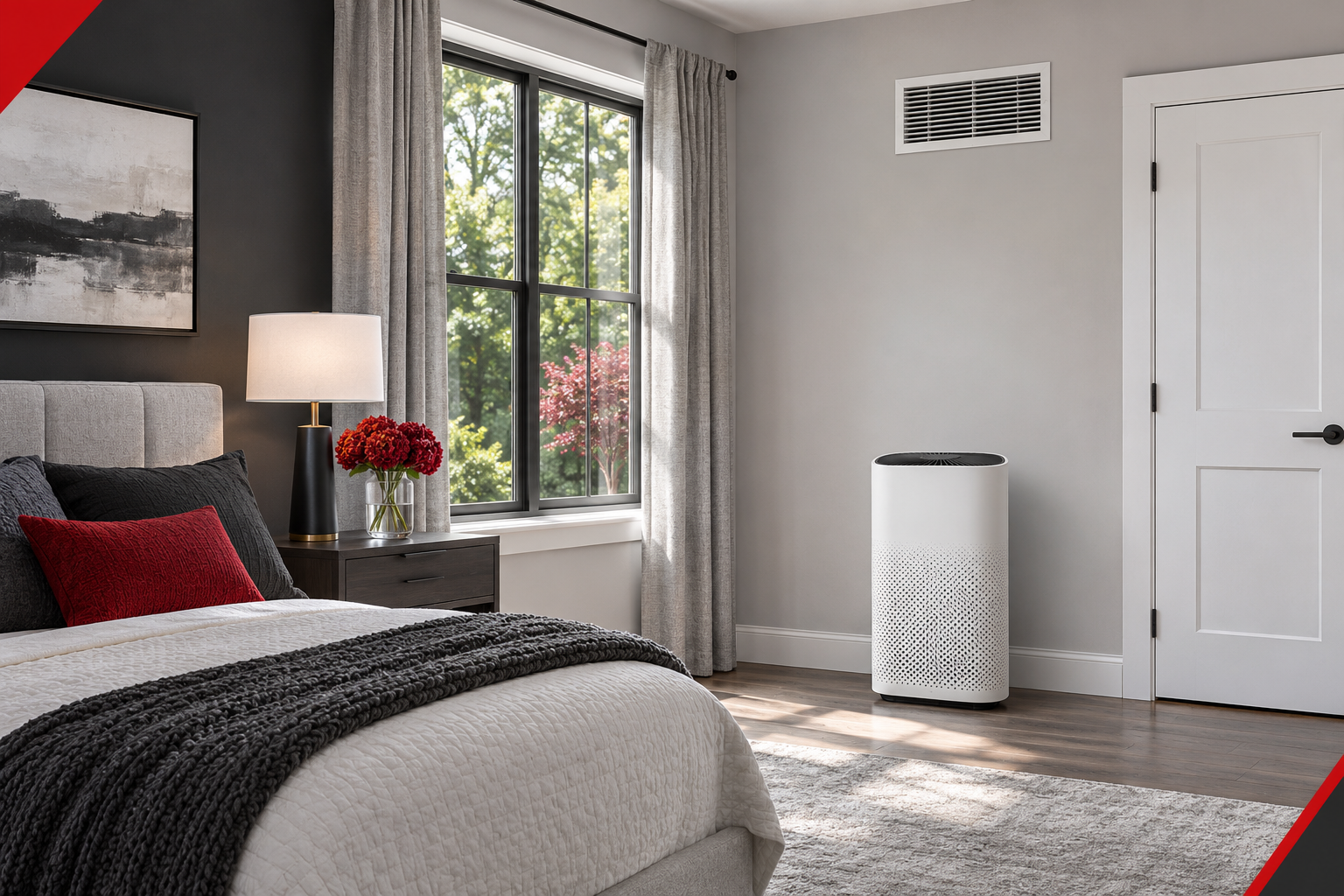
A portable unit has its own intake and outlet within the space. That local arrangement can be useful when the goal concerns one room, but its location still needs to work with furniture and normal use. A unit hidden behind a chair is a different operating proposition from one with the clearance required by its manual.
This sketch is a discussion aid, not a duct design. Do not cut a door, add a transfer opening or change registers to make the drawing appear complete. Any proposed change belongs in a professional assessment.
Check the central option without assuming a filter upgrade is enough
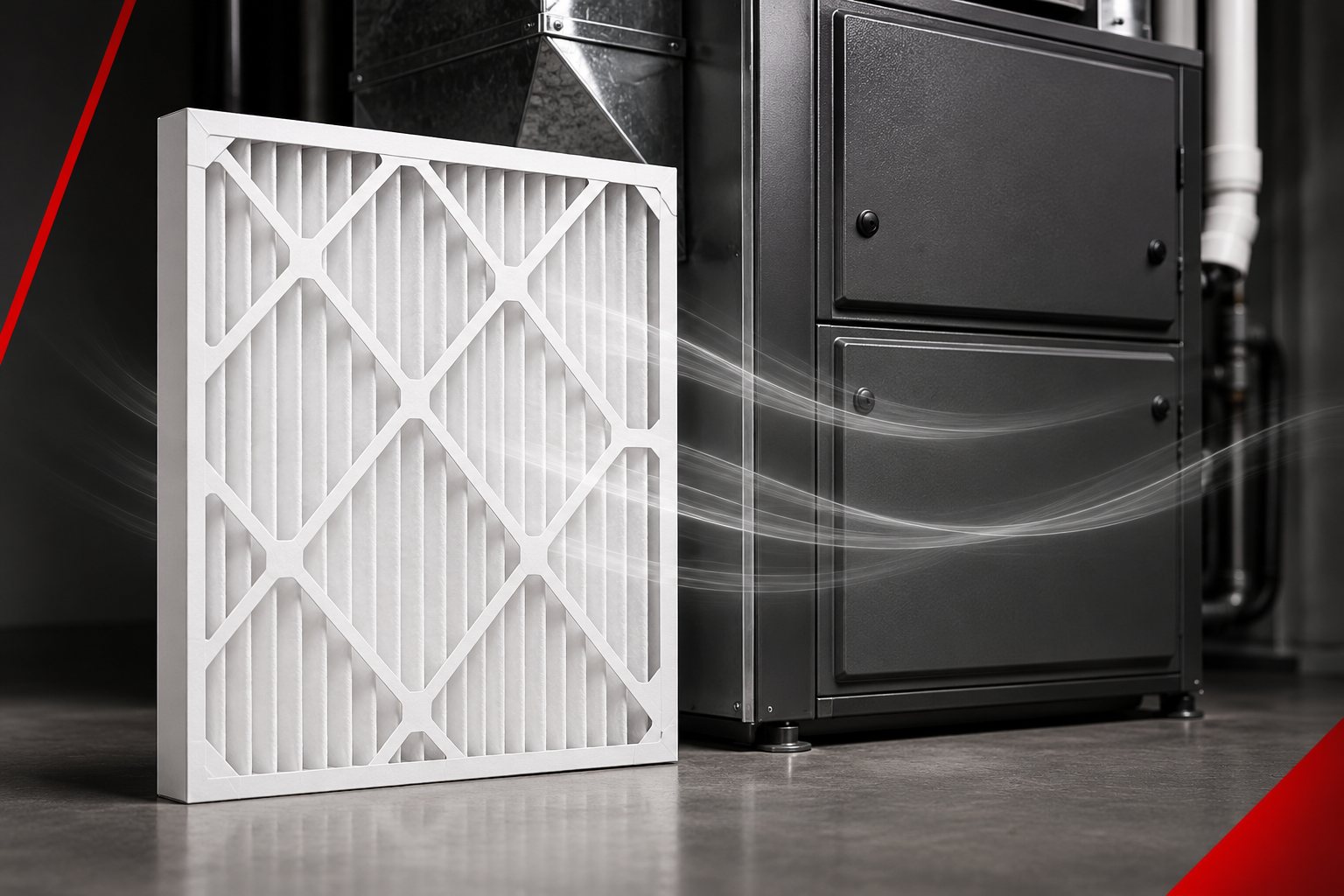
Ask which air handler serves the room, where its filter is located and when air passes through it. EPA’s home air-cleaner guide distinguishes central filtration from room filtration and notes that HVAC filters work while the system operates. More runtime can have energy and humidity-control implications.
A higher-efficiency central filter also needs to suit the installed equipment. Confirm the specified product, cabinet and maintenance needs with the equipment instructions and an appropriate technician. The question here is how central filtration serves the room, rather than which MERV number should win a shopping comparison.
If the proposed solution includes a different fan schedule, ask who will verify that it is suitable. Do not assume that continuous fan operation is harmless for every heating and cooling configuration throughout the year.
Evaluate a portable unit at the speed you will actually use
Look for a clean air delivery rate, or CADR, appropriate for the intended space. ENERGY STAR’s buying guidance explains CADR, room-area considerations and the significance of ceiling height. Follow the specific model’s room-sizing information rather than treating a single square-foot claim as complete.
Ask which operating speed supports the advertised performance. A quiet overnight setting may differ from the setting used for the headline figure. Look for published information rather than assuming that every mode provides the same air-cleaning rate.
Consider whether the sound and airflow will be acceptable at a desk or beside a bed. If the unit will be turned down or switched off whenever the room is occupied, include that reality in the comparison. The best specification on paper is not useful if the intended operating arrangement is impractical.
Distinguish particle filtration from broader claims
The names on a product box can sound more comprehensive than the documented function. Ask what the device is intended to remove and which evidence supports the claim. A particle-focused rating should not be read as a general guarantee about gases, odors, ventilation or personal health.
EPA advises avoiding equipment that intentionally produces ozone. A familiar-sounding phrase such as “fresh air” does not establish that a product introduces outdoor air or is appropriate for the household. Read the actual technology description and safety information.
Do not choose a device on the promise that it will treat an allergy, prevent illness or make an unresolved moisture problem disappear. Bring persistent health concerns to an appropriate healthcare professional and building problems to the relevant qualified specialist.
Make space, power and maintenance part of the decision
Before purchase, identify a location that meets the manufacturer’s placement and electrical instructions. Keep the intended airflow clear of curtains, bedding and stored items. ENERGY STAR specifically advises following the product manual and avoiding obstructed airflow.
Check whether the chosen location allows safe filter access. Find the replacement filter model, availability and current cost. A purchase comparison should include the consumables and the effort needed to maintain the device, without assuming that every home follows the same replacement interval.
For a shared room, decide who will check the filter and record replacement dates. Keep the manual with the model information. A simple maintenance plan is more useful than relying on the person who happened to place the original order to remember every future detail.
Consider three reasonable outcomes
The review may support improving the central system first, especially when the concern reflects an unresolved distribution or maintenance issue. A portable device should not become a way to ignore a problem the HVAC system still needs evaluated.
A second outcome is a room unit selected for a specific local task while the existing central filtration remains appropriate. A third is using both, with a clearly stated role for each. These are possible planning outcomes, not rankings that apply to every closed room.
Ask what would count as success for the chosen approach. A useful goal describes the concern, the location and the intended operation. Avoid a vague promise that the room will become “healthy” or that all air-quality questions will be settled by one appliance.
Keep ventilation on a separate line
A filtration discussion should leave room for the outdoor-air question. Ask how the occupied room is ventilated and whether its normal closed-door use changes the assessment. Recirculating room air through a filter does not, by itself, introduce outdoor air.
If the household is also renovating the room, bring these questions into the project scope before finishes are complete. Furniture, door use and service access can all be discussed while there is still flexibility, rather than after equipment has been purchased.
Take a short brief to the professional
Record the room dimensions and ceiling height, normal occupancy, door position, concern and timing. Add the existing HVAC/filter information, candidate portable unit specifications and likely operating speed. Mark unknowns rather than guessing.
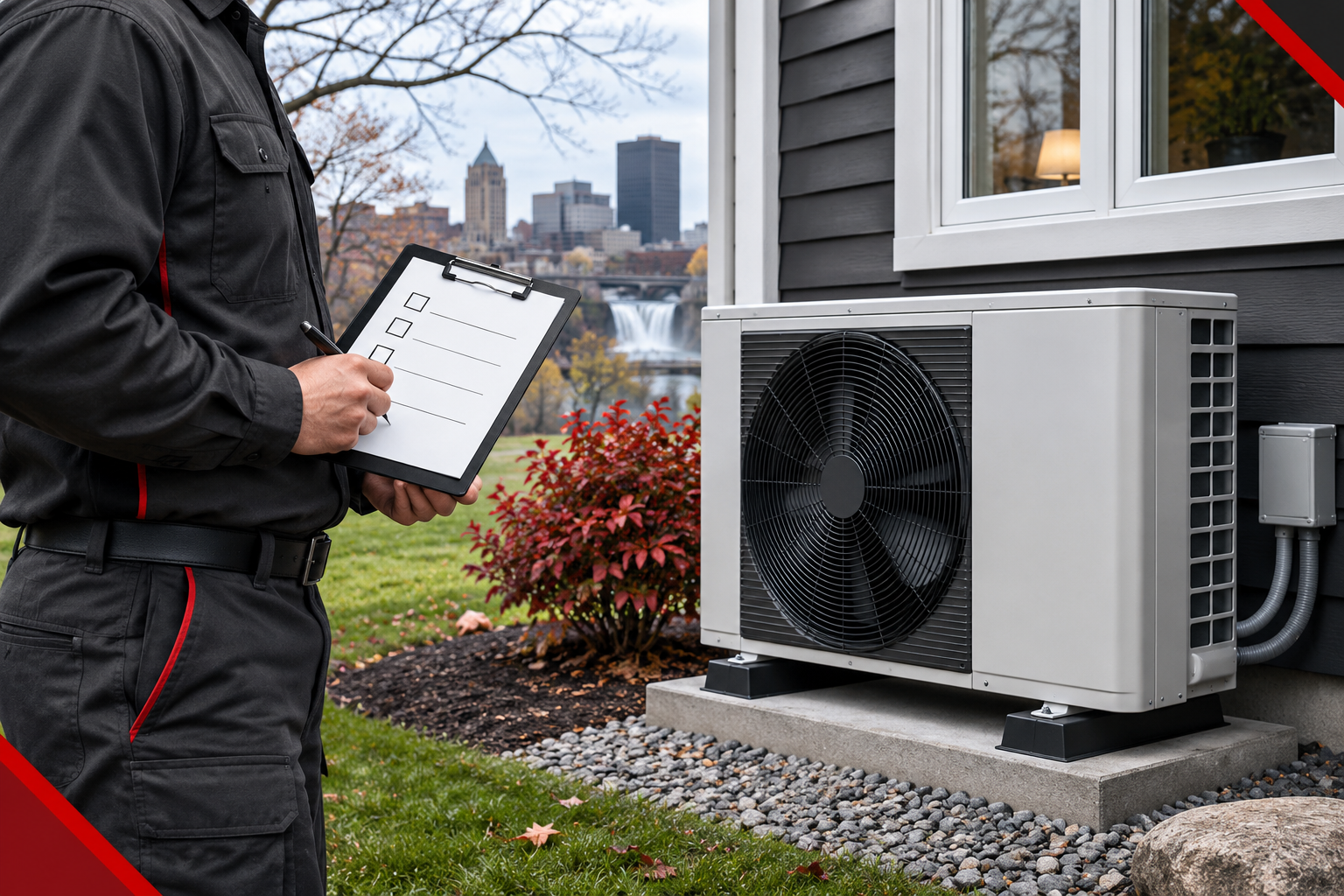
MGM’s equipment-repair information provides a starting point for discussing an existing system concern. Confirm what assessment is included in the service you request.
The decision becomes clearer when each option has a defined job. Follow the air path, check the operating assumptions and keep ventilation and source investigation visible. That produces a more useful plan than asking whether a portable cleaner or a central filter is universally better.
About the Author: Gedeon Shikhman